
Last updated October 31, 2026
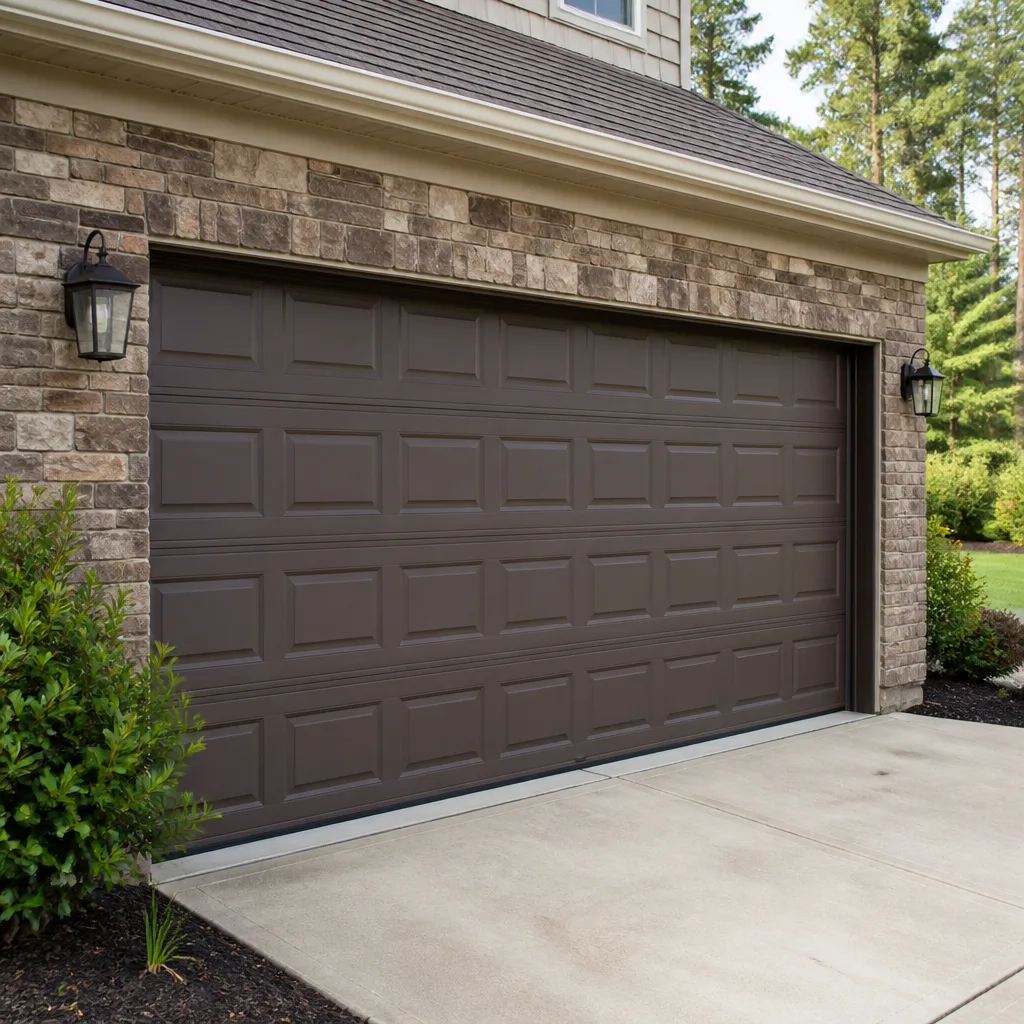 Raised-panel steel
 Carriage house
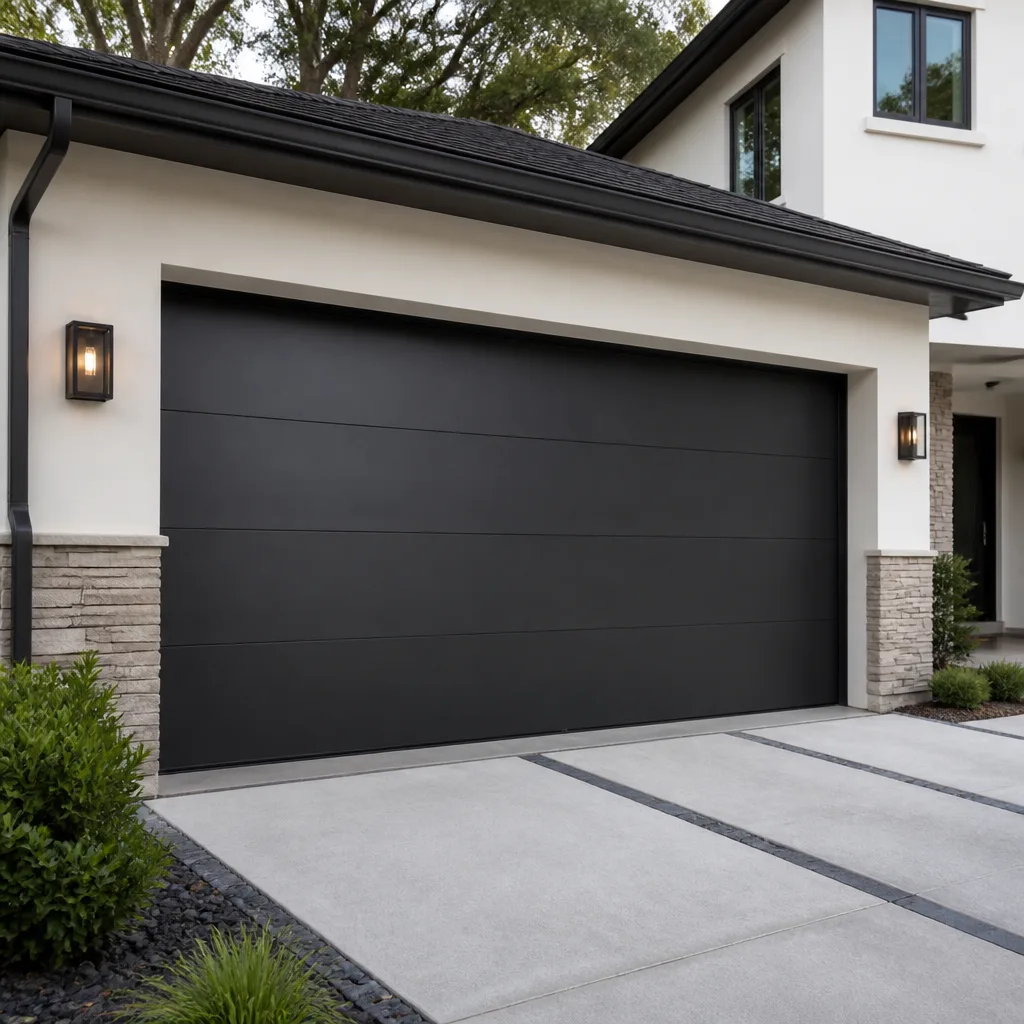 Modern flush
 Full-view glass
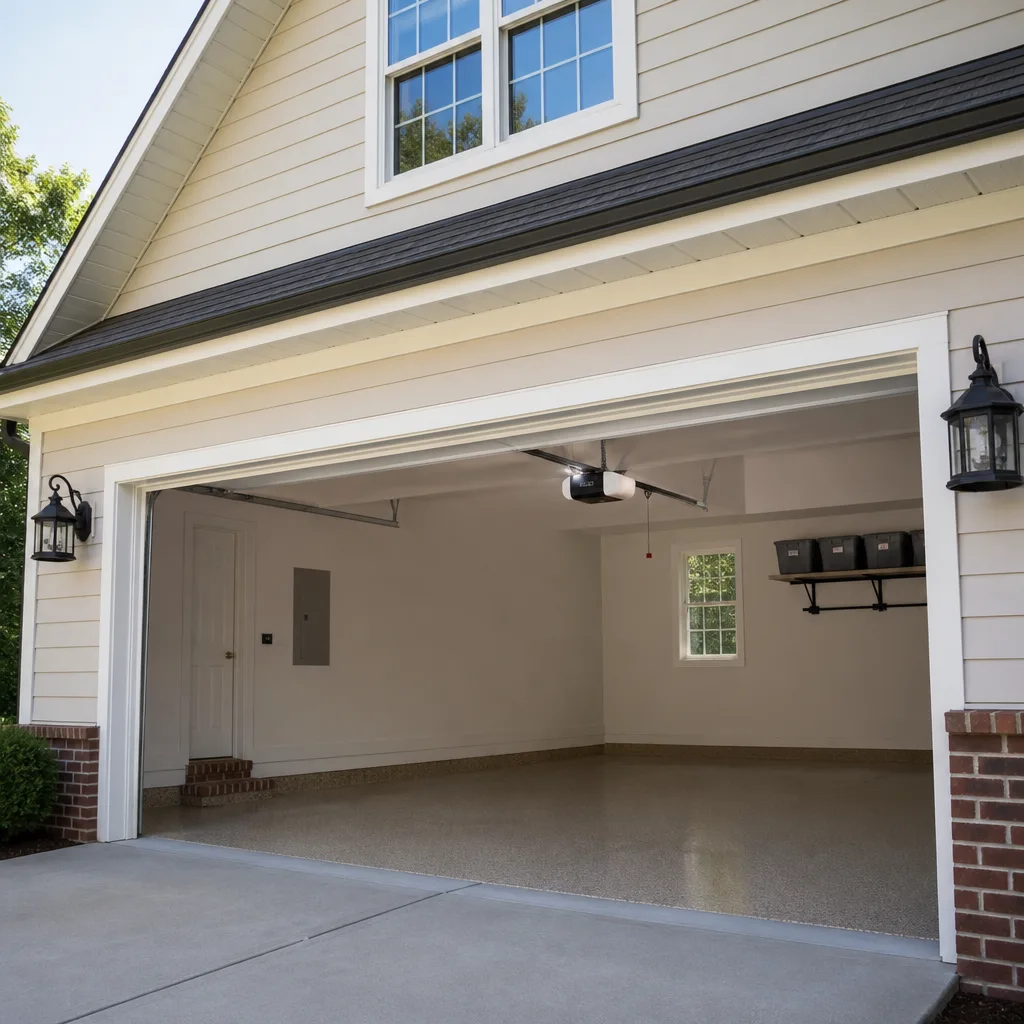 LiftMaster openers
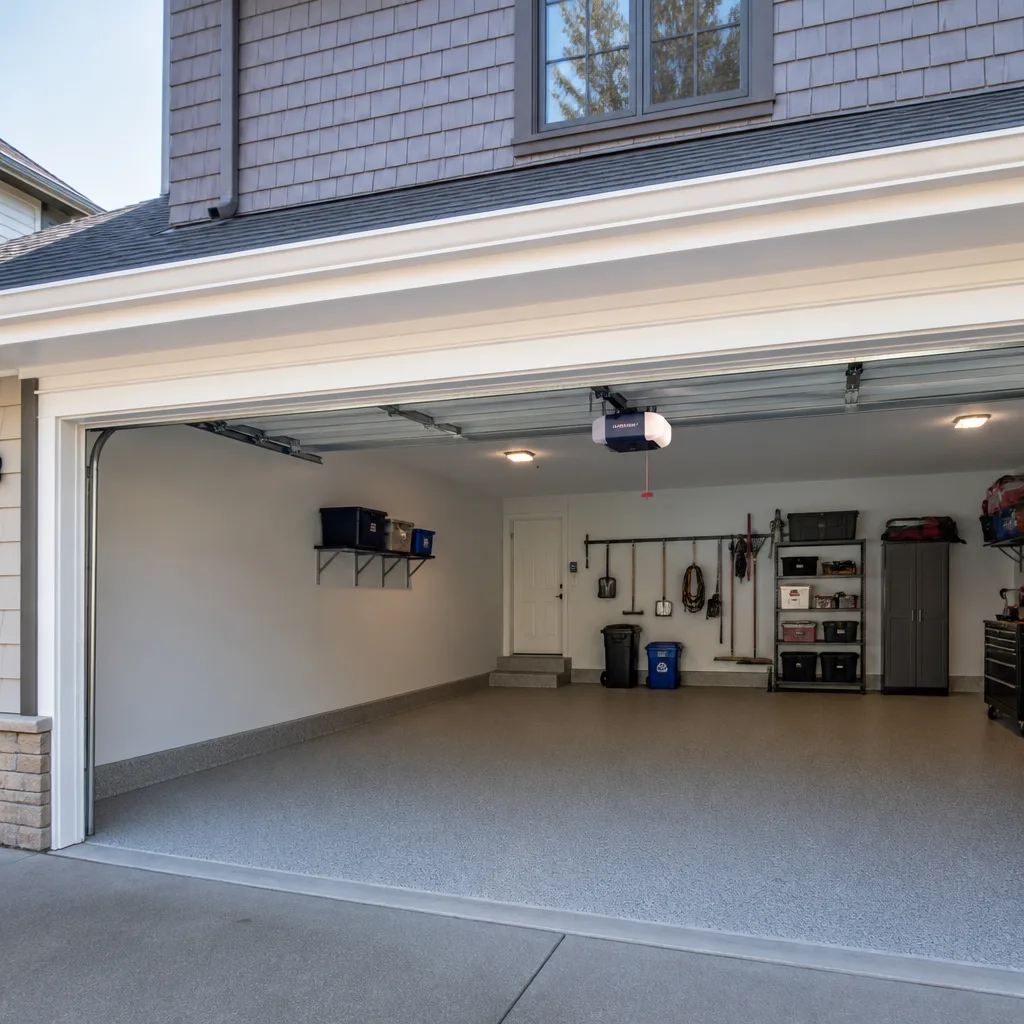 Chamberlain openers
Full 25-point door and opener safety check with every visit - springs, cables, rollers, tracks, and your LiftMaster or Chamberlain opener included
You get a price before we start. It does not change when the truck arrives.
Get your free estimateSeasonal Garage Door Care for Murrieta: Year-Round Homeowner’s Guide
Most seasonal garage door advice gets written for places with snow and ice, or for the mild coastal strip. Murrieta is neither. We get triple-digit summers that bake door panels and thin out grease, December nights that drop into the 30s, and fall Santa Ana events that hit doors with wind loads most Southern California garages never feel. Each of these creates a different stress pattern and a different failure mode. This guide covers all four seasons in Murrieta, what actually breaks during each one, and what you can check yourself in under fifteen minutes. For more guides & resources, see our blog.
Styles & brands we work with
Quick Answer
Seasonal garage door maintenance in Murrieta comes down to four things: check and lubricate moving parts before summer heat arrives, inspect for rack and panel distortion after Santa Ana wind events, watch for thickened grease and slow travel during winter cold snaps, and re-tension cable drums each spring after thermal contraction cycles. Most of this takes under fifteen minutes per season and prevents the majority of repairs we see in the field. If you want deeper detail, read The Complete Garage Door Repair Guide for Murrieta Homeowners.
Table of Contents
- Pre-Summer Heat Prep for Murrieta Garage Doors
- Santa Ana Wind Prep: The Underestimated Threat
- Winter Cold-Snap Care: Grease, Travel Speed, and Fault Codes
- Spring Reset: Re-Tensioning After Thermal Contraction
- The Four-Season Task Calendar
- Tools and Supplies Worth Keeping On Hand
- Common Mistakes to Avoid
- When to Call a Professional
- Frequently Asked Questions
- The Bottom Line
Pre-Summer Heat Prep for Murrieta Garage Doors
Murrieta summers routinely push past 100 degrees, and a garage door sitting in direct afternoon sun can reach surface temperatures well above that. Here’s what happens: the grease inside the rollers and on the torsion spring coils thins out, drips off, and leaves metal running against metal. The bottom seal, already compressed from years of use, hardens further and loses its ability to conform to the concrete. And the opener motor, mounted near the ceiling where hot air collects, runs hotter than it does in any other season.
We see a pattern every year in Murrieta. The first real heat wave brings a cluster of calls about screeching doors, doors that stop halfway up, and openers that shut off mid-cycle. Most of these failures could have been caught in late May or early June with a fifteen-minute inspection.
What to Check Before Summer Heat Hits
- Test the bottom seal by closing the door on a dollar bill. If you can slide the bill out easily in more than two spots along the width of the door, the seal has lost compression and needs replacement before summer dust and pests find the gap. In Murrieta, where summer afternoon winds kick up fine dust, a worn seal lets in more than you’d expect.
- Lubricate the torsion spring coils from end to end. Use a lithium-based garage door grease, not WD-40. WD-40 is a solvent as much as a lubricant and actually strips the protective film. The goal is to get grease between the coil gaps so the spring doesn’t grind against itself as it winds and unwinds.
- Listen to the opener during a full cycle. Run the door up and down once with the garage quiet. A healthy opener makes a steady hum. A straining sound, especially near the end of the up cycle, often means the spring has lost tension and the motor is doing more work than it’s rated for.
- Check the opener’s thermal cutoff behavior. On a hot afternoon, run the door twice in a row. If it refuses to move after the second cycle, the thermal protection circuit is tripping. That’s normal behavior for an overheating motor, but it means the opener needs ventilation or the door’s balance is off and overloading the motor.
One specific thing to know about LiftMaster and Chamberlain openers: their thermal protection logic is more aggressive than older Genie or Craftsman units. If one of the newer models keeps cutting out during Murrieta heat waves, the motor is probably being overworked by a door that’s out of balance, not failing on its own. Fix the door, and the opener problem usually disappears.
If any of these checks turns up a problem, have it addressed before the first heat wave. A bottom seal replacement is a quick job. A torsion spring that’s lost tension is not a DIY fix, and it gets more dangerous as the weather gets hotter and the metal expands. For a full look at what repair work involves in Murrieta, see our page on Garage Door Repair in Murrieta.
Santa Ana Wind Prep: The Underestimated Threat
Ask a Murrieta homeowner about garage door risks and most will mention heat, maybe earthquakes. Almost nobody mentions wind. But Santa Ana events, which typically hit between September and November, create negative pressure differentials that push and pull on a garage door in ways a normal door cycle never does. A door that opens and closes smoothly under calm conditions can flex, twist, and bind during a sustained wind event.
The failure sequence usually goes like this: wind gusts push against the door face, the panels flex slightly, the hinges absorb some of the stress, and the track anchors take the rest. Over multiple wind events, the track can drift out of square. Once the track is even slightly misaligned, the door starts to bind on one side, the opener works harder, and the cables start to wear unevenly. The damage often doesn’t show up until weeks after the wind dies down.
What to Inspect After Every Santa Ana Event
- Stand inside the garage with the door closed and look at the gaps. The gap between the door and the jamb on the left side should match the right side. Walk the length of the door. If one side is tighter than the other, the track has shifted.
- Run the door up and watch the rollers in the track. They should roll smoothly without dragging against the track flange. A roller that scrapes, wobbles, or squeaks on one side is a sign the track is out of square.
- Look for horizontal stress lines on the door panels. On single-layer steel doors, wind flex shows up as faint creases or dents that run horizontally, often near the panel joints. Once a panel is creased, it’s structurally weakened and more likely to bind.
- Check the top panel at full open. With the door fully open, stand under it and look at the top panel where the opener arm attaches. If the panel has been flexing, you’ll see cracks around the arm bracket or the panel itself bowing.
If you’re finding rack in your door after each wind season, horizontal bracing struts can help. These are the metal channels that run across the inside of the door panels and stiffen them against wind load. They’re standard on insulated and wind-rated doors, but many basic single-layer doors in Murrieta didn’t come with them. We can add bracing to most brands, including Clopay and Amarr doors, without replacing the whole door. It’s a modest upgrade that pays off every fall.
One more thing about Santa Ana damage: it’s cumulative. A door that’s slightly out of square after one season will get worse the next, and the opener will keep compensating until something fails. If you’re hearing a scraping noise that comes and goes, or the door sounds different when the wind was blowing the night before, have someone look at it before the next event.
Winter Cold-Snap Care: Grease, Travel Speed, and Fault Codes
Murrieta doesn’t get a real winter by Midwest standards, but the cold snaps we do get, especially those overnight dips into the 30s, do something specific to garage doors. Grease thickens in cold weather. That’s basic physics. The grease in your door’s rollers and on the torsion spring gets thicker at 35 degrees than it is at 75 degrees. On a door that’s already running on older or thinner lubricant, that thickness is enough to slow the door’s travel speed.
Modern openers notice this. LiftMaster, Chamberlain, and Genie openers with force-sensing technology monitor how fast the door moves and how hard the motor works. If the door moves slower than the opener’s expected speed curve for too long, the opener logs a fault code and may reverse or stop mid-cycle. The opener assumes something is wrong, and in a way it is: the door is fighting cold, thickened grease.
What Cold Weather Does to Your Door
- Grease thickens. Rollers spin slower, the spring winds and unwinds with more resistance, and the whole assembly needs more force to move.
- Steel contracts. The door panels and tracks shrink slightly in cold weather. On a well-maintained door, this is negligible. On a door with tight clearances, it can cause binding.
- Opener lubrication thins in contradiction. The grease inside the opener’s drive mechanism can struggle in both directions: cold makes some components stiff while others still run loose. Inconsistent resistance confuses force-sensing diagnostics.
- Cable tension shifts. The lift cables, which are steel, contract slightly in cold weather. On a door with properly tensioned cables, this is fine. On a door with old cables or worn drums, the shift can cause uneven travel.
What to Do Before and During Cold Snaps
- Lubricate before the cold arrives, not during it. Fresh lithium grease stays more fluid at low temperatures than old, hardened grease. October is the right month in Murrieta for a full lubrication, well before the first December dip.
- Run the door once on cold mornings before you need it. A single warm-up cycle redistributes grease and catches any binding before you’re late for work and the door won’t open.
- Watch for slower-than-normal travel. If the door moves noticeably slower on a cold morning, that’s the first sign of thickened grease or something more serious. Don’t ignore it.
- Note any fault codes on the opener. Most modern openers store fault codes that can be read from the control panel or a MyQ app. If your LiftMaster or Chamberlain opener is showing sensor errors specifically on cold mornings, the cold grease is likely the trigger.
If cold-weather sluggishness persists after a fresh lubrication, there’s usually a deeper issue: worn rollers, a spring losing tension, or a track problem. The opener is telling you something. For help diagnosing what’s actually wrong, visit our Garage Door Opener Repair in Murrieta page.
Spring Reset: Re-Tensioning After Thermal Contraction
After months of hot-then-cold cycling, the metal components in your garage door have expanded and contracted dozens of times. The cables and springs, which store and release tension every time the door moves, are the components most affected by this cycling. What March and April give you in Murrieta is a window to reset the door’s balance before summer heat sets in again.
Here’s the logic: during winter, the steel cables contract slightly. During summer, they expand. This micro-shifting, repeated season after season, causes the cable drums to settle into slightly different positions than the original installation. The result is a door that’s not perfectly balanced: one side travels slightly faster than the other, or the door sags on one side, or the spring tension is no longer dialed in for the door’s actual weight.
We see this in Murrieta every spring. Doors that were running smoothly in September come out of December and January with a slight lean, a small gap at the bottom, or a subtle bind in the track. Homeowners hear it as a rattle or feel it as a door that’s heavier than it used to be.
Spring Balance Testing, Step by Step
- Disengage the opener. Pull the red release handle while the door is closed. This disconnects the door from the opener carriage.
- Lift the door manually to waist height. The door should stay in place on its own. If it falls, the spring tension is too low. If it rises, the tension is too high.
- Lower the door and watch the cables. Both lift cables should have equal tension. Run your fingers along them, gently, wearing gloves. A loose cable on one side means the drum has shifted.
- Reconnect the opener and run a full cycle. Listen for grinding, popping, or rattling. A spring that’s lost tension will make the opener strain; a drum that’s shifted will cause the door to tilt slightly as it travels.
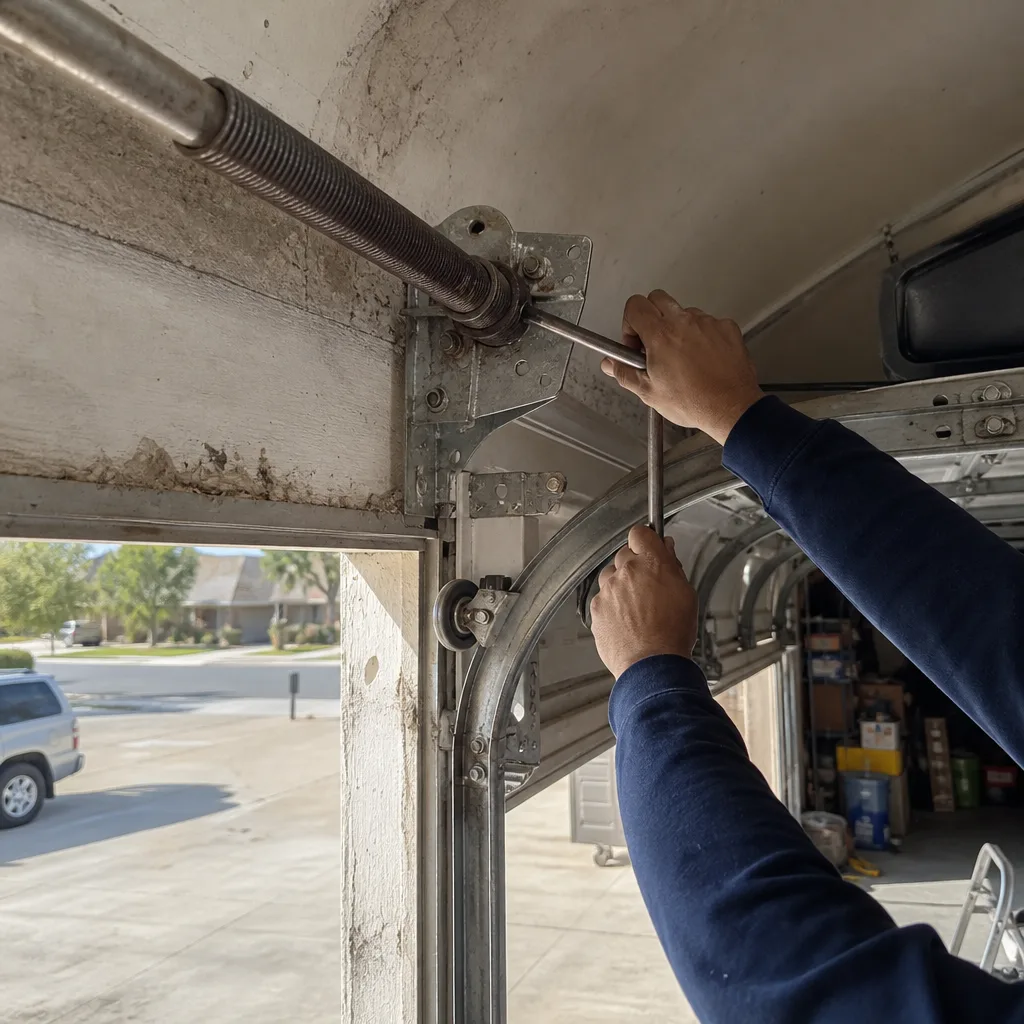
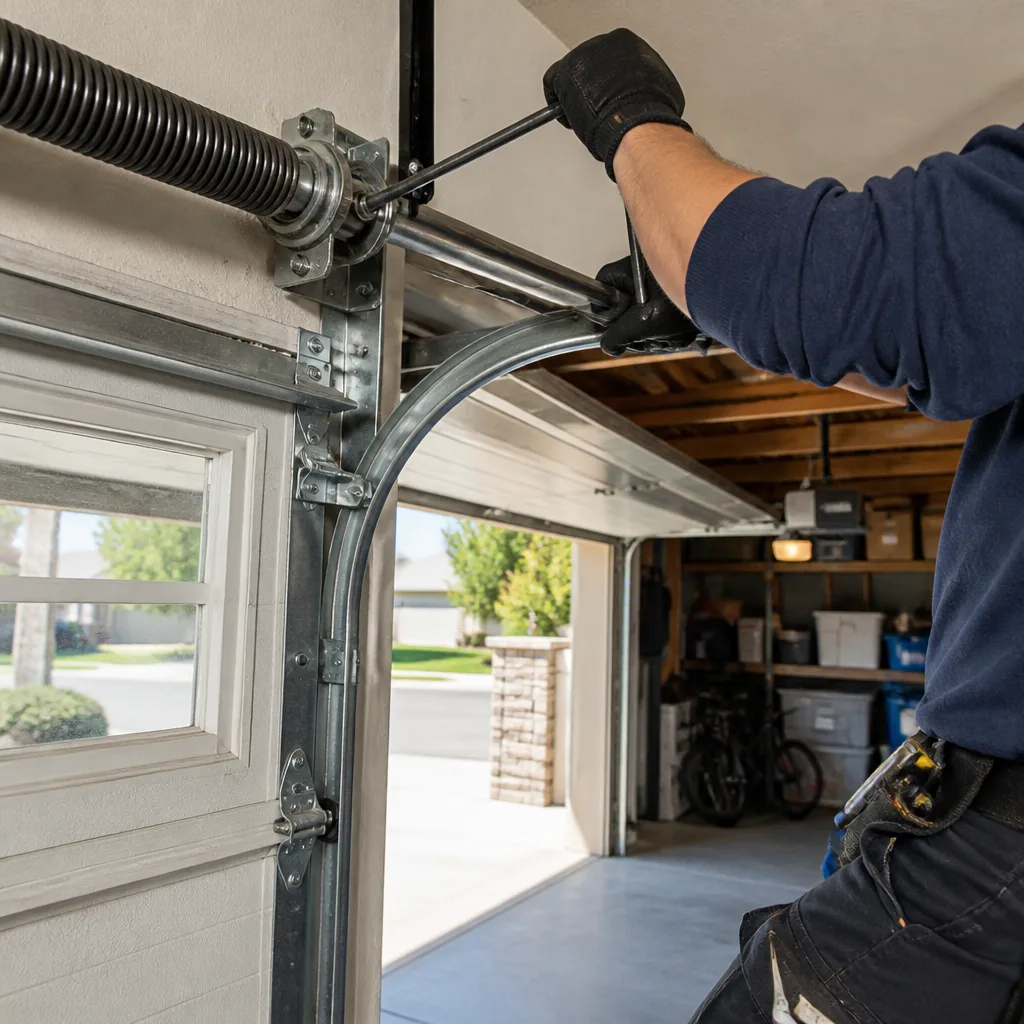
If the door doesn’t stay put at waist height or the cables are uneven, the springs or drums need adjustment. This is not a job for a homeowner. Torsion springs hold thousands of pounds of tension, and a spring that snaps during adjustment can cause serious injury. We handle spring re-tensioning and cable drum alignment as part of our repair service. If spring maintenance is on your list this year, learn more at our Murrieta Garage Door Service home page.
For homeowners who want a visual sense of drum position: with the door closed, look at the cable drums mounted above the door on the torsion tube. The cables should ride cleanly in the drum grooves without overlapping or riding up on the flanges. If you see a cable that’s crossed over itself or not sitting in the groove, that drum has shifted. It needs attention.
The Four-Season Task Calendar
Here’s a practical schedule that fits Murrieta’s actual weather patterns. Each task list is designed to take under twenty minutes, and the whole year’s maintenance totals less than two hours. We’ve matched each season to the specific stresses Murrieta throws at garage doors. For a broader overview, see The Complete Guide to Garage Door in Murrieta.
March – April: Spring Reset
- Perform the manual balance test described above (door disengaged, lift to waist height, check it holds)
- Inspect both lift cables for fraying, corrosion, or uneven tension
- Check cable drum alignment and look for crossed or riding cables
- Lubricate rollers, hinges, and torsion spring with lithium grease
- Test the auto-reverse safety feature: place a 2×4 flat under the door, close it, and confirm it reverses on contact
May – June: Pre-Heat Prep
- Test the bottom seal’s compression by closing the door on a dollar bill and checking for resistance
- Lubricate the torsion spring coils thoroughly before summer temps hit triple digits
- Run the opener twice in a row on a hot afternoon to check thermal protection behavior
- Clean the photo-eye sensors on both sides of the door at floor level. Dust from spring winds often coats the lenses
- Check the door balance manually; heat exacerbates any existing imbalance
September – October: Santa Ana Prep and Post-Wind Inspection
- After the first Santa Ana event, check door-to-jamb gaps on both sides for even spacing
- Run the door up and watch for roller drag, scraping, or squeaking in the tracks
- Inspect panels for horizontal stress creases, especially near panel joints
- If wind damage is found, consider horizontal bracing struts for structural reinforcement
- Re-lubricate everything before cold weather arrives, using fresh lithium grease
December – January: Cold-Snap Vigilance
- Run and watch the door on cold mornings; note any sluggish travel or unusual noise
- Check the opener for stored fault codes, especially sensor or force-related errors
- Listen for creaking or popping sounds during operation, which signal friction from thickened grease
- Verify that the auto-reverse safety function still works; cold can affect sensor performance
- If the door moves slower than normal, schedule a lubrication service or diagnostic before the problem worsens
Tools and Supplies Worth Keeping On Hand
You don’t need a mechanic’s toolbox for seasonal garage door care. A few specific items will cover almost everything on this page. The key is using the right lubricant (lithium grease, not a general-purpose spray) and having a way to check alignment accurately.
- Lithium-based garage door grease, in a spray can or tube. Avoid WD-40 entirely. It’s a water displacer and rust penetrant, not a lasting lubricant, and it strips existing grease.
- A four-foot level, or any straightedge long enough to check track alignment. A short level won’t show you a gradual track drift.
- Work gloves, especially for touching cables and springs. Cables can have frays that cut bare hands.
- A dollar bill, for testing bottom seal compression. Low-tech, fast, and surprisingly accurate.
- A flashlight, for inspecting track interiors and drum grooves. Most garages are too dim to see cable seating clearly.
- Paper towels or a clean rag, for wiping dust off photo-eye lenses and cleaning old grease before applying new.
For most homeowners, the full list costs under $40 and lives on a garage shelf for years. The only consumable is the lithium grease, and a can lasts through two or three seasonal maintenance cycles.
Common Mistakes to Avoid
- Using WD-40 on the torsion spring. WD-40 cleans and displaces moisture, but it doesn’t lubricate under load. It actually strips the protective grease film and leaves the spring coils grinding against each other. Use lithium grease instead.
- Skipping the manual balance test because the door “seems fine.” An opener can mask spring fatigue for months by compensating with motor force. The only way to know the spring is doing its job is to disengage the opener and test by hand.
- Ignoring Santa Ana wind damage because the door still opens and closes. A racked door works until it doesn’t. The damage accumulates silently, and the failure often comes when the opener, cables, or track finally give out under stress that a properly aligned door would have shrugged off.
- Waiting for a visible gap under the door before replacing the bottom seal. By the time you see daylight, the seal has been failing for months. In Murrieta, where summer dust and pest pressure are real, the dollar-bill test in May saves you from dust and rodent problems in July.
- Lubricating in the middle of a cold snap instead of before it. Cold grease is hard to work with, and adding new grease on top of old, hardened grease doesn’t fix the problem. The right time is October, when the weather is still mild and the grease can penetrate thoroughly.
- Trying to adjust torsion springs without training and proper tools. Torsion springs hold enormous stored tension. A spring that releases unexpectedly can break bones or worse. This is the one job on this entire page that has genuinely dangerous consequences if done wrong. Call a pro.
When to Call a Professional
Some seasonal maintenance tasks are safe and straightforward for a homeowner. Others are dangerous or impossible without training. Here’s the line: anything involving the torsion spring system, cable replacement or adjustment, and track realignment should be handled by a garage door specialist. These components are under high tension, and their failure modes are fast and unforgiving. A door off its tracks can drop without warning, and a spring under tension stores enough force to throw a tool across the garage.
Other situations that warrant a professional call: a door that won’t stay in place during the balance test, cables that show visible fraying, drums with misaligned or crossed cables, and panels with structural creases from wind damage. Each of these indicates a deeper problem that seasonal maintenance can’t fix. Murrieta Garage Door Service offers free estimates in Murrieta – call (866) 798-2664 and we’ll diagnose the issue and give you a written quote before any work starts.
Frequently Asked Questions
Lubricate your garage door twice a year in Murrieta: once in March or April after winter cold has passed, and once in October before cold weather returns. The late-spring application matters more for heat resistance, and the fall application matters more for cold-weather performance. Using lithium-based grease each time is more important than the exact timing.
Grease thickens at low temperatures, which increases friction in the rollers, hinges, and torsion spring. On a cold Murrieta morning, that extra friction can slow the door’s travel enough that your opener’s force sensors interpret it as a problem and log a fault code. Fresh lithium grease applied in October usually prevents this. Call (866) 798-2664 for help if a fresh lubrication doesn’t fix the slow travel.
Yes. Sustained wind creates negative pressure differentials that flex the door panels and stress the track anchors. Over multiple wind events, the track can drift out of square, panels can develop horizontal stress creases, and the door can start binding. Post-wind inspection is part of every fall maintenance plan in Murrieta, especially for single-layer steel doors without horizontal bracing.
Disengage the opener with the door closed, then lift the door manually to waist height. If the door falls or feels heavy, the spring has lost tension and the opener has been compensating. A properly tensioned door holds itself at waist height. Spring adjustment is dangerous work that should always be done by a professional.
In Murrieta, the two thresholds that matter are about 100°F for heat-related stress and about freezing for cold-related stress. Above 100°F, grease thins, springs lose lubrication faster, and openers run hot enough to trip thermal protection. Below 35°F, grease thickens enough to slow door travel and trigger fault codes. If your door behaves differently on the first hot or cold day of a season, that’s a warning sign.
No. The price is quoted and agreed upon before any work starts. What’s on the written estimate is what you pay, and we don’t change it after the fact. Garage doors are all we do, so we know what we’re looking at when we inspect a door. Call (866) 798-2664 for a free estimate and an exact number.
The Bottom Line
Murrieta’s garage door problems follow a seasonal pattern, and a little preventive attention earns real reliability. Check the seal and lubrication before heat waves. Inspect the track and panels after Santa Ana events. Watch for cold-weather sluggishness in December and January. Re-test the door’s balance each spring. Most of this takes minutes, and the payoff is a door that works without surprise failures during the hottest and windiest weeks of the year. If you find something you can’t fix yourself, Murrieta Garage Door Service is at Garage Door Installation in Murrieta for upgrades and replacements, and we’re one call away at (866) 798-2664 for repairs, opener diagnostics, and seasonal maintenance.
Written by the team at Murrieta Garage Door Service, serving Murrieta since 2014.
See the difference
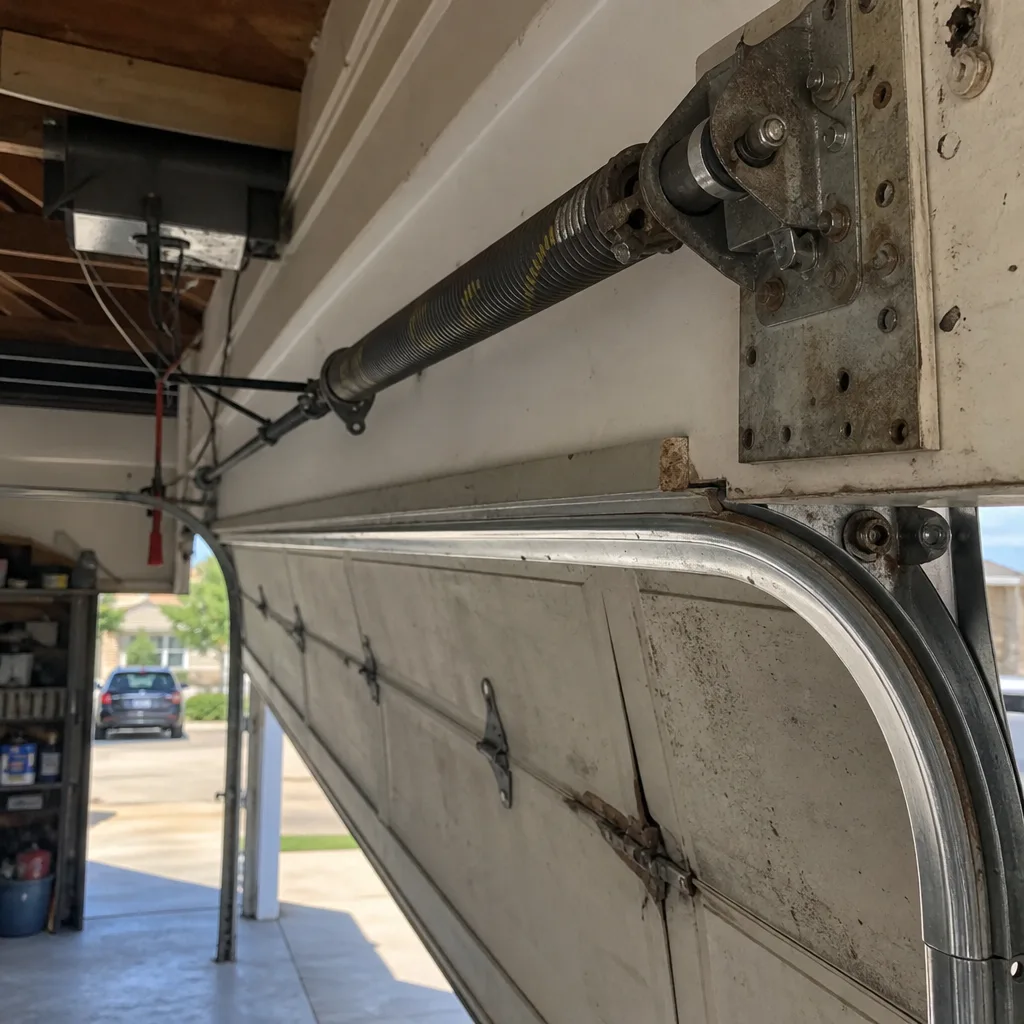 Before
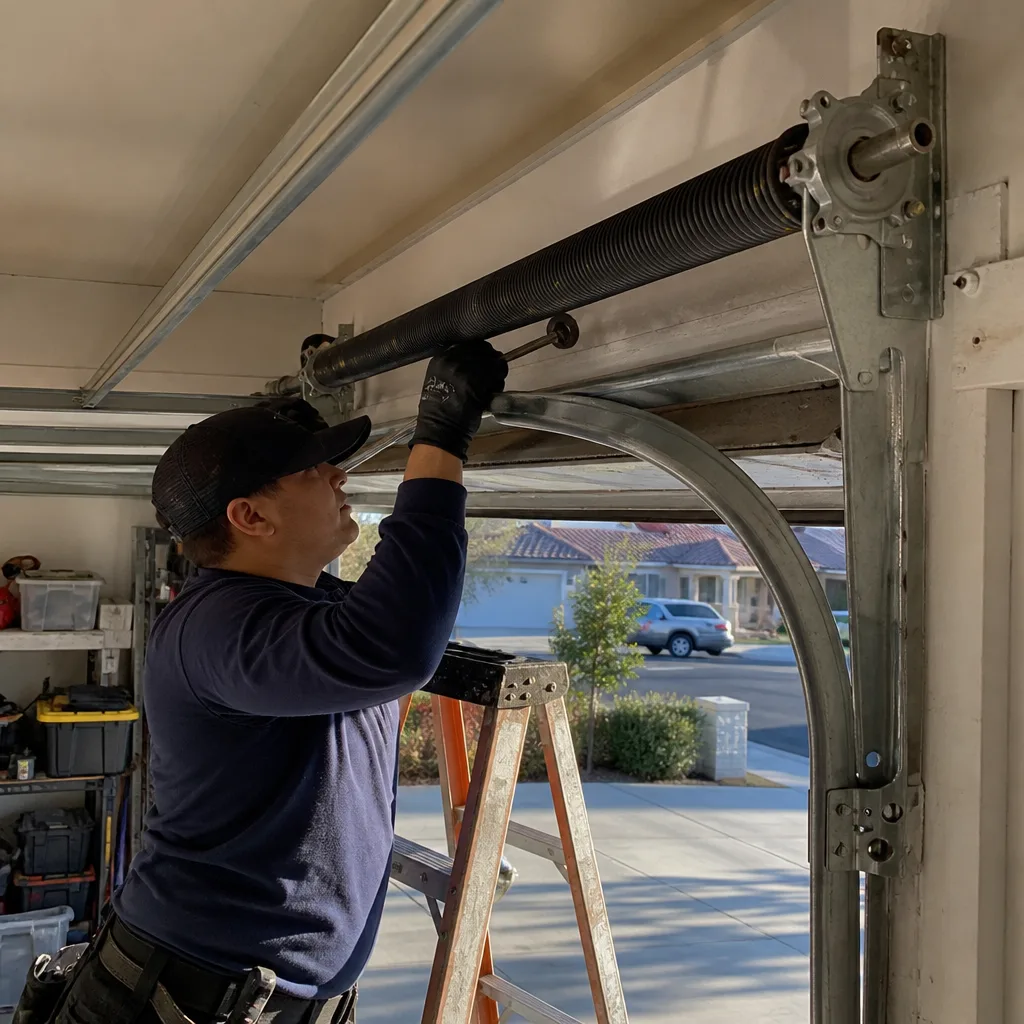 After
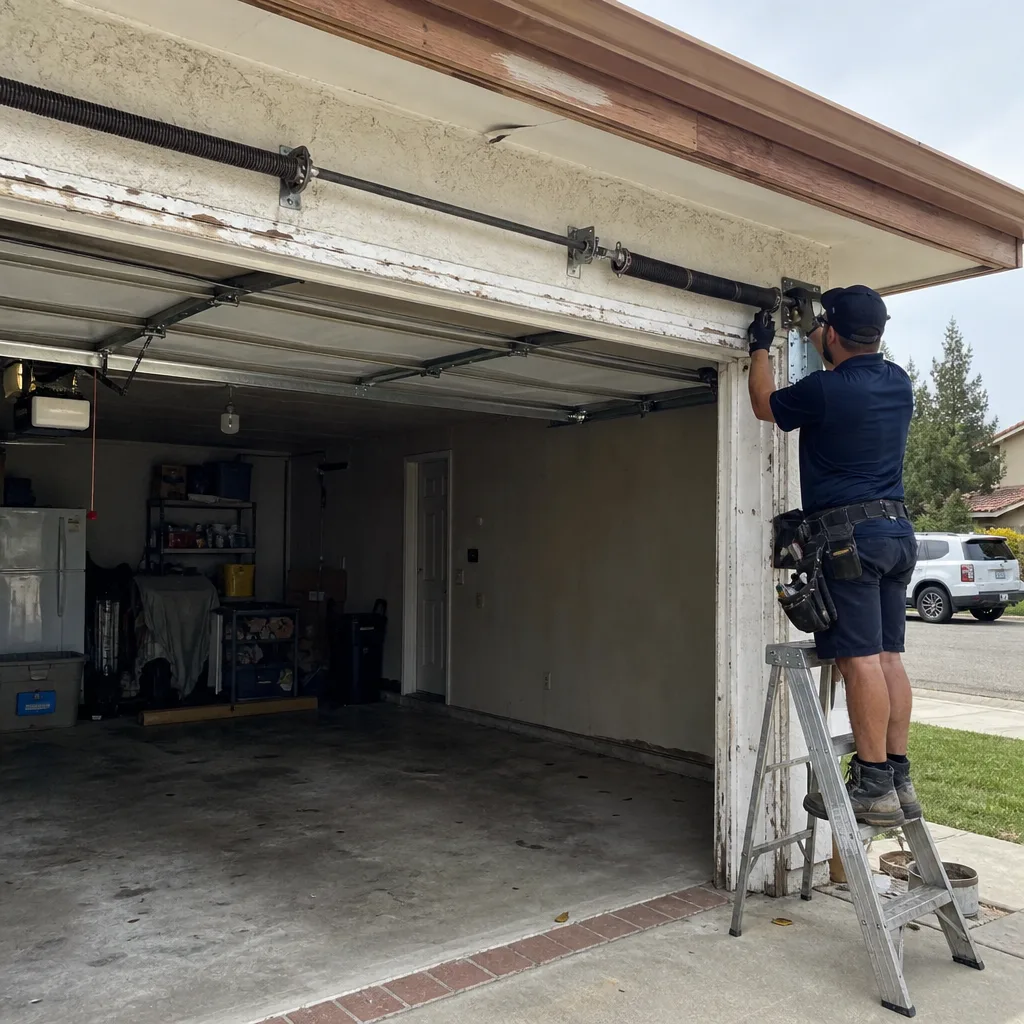 Before
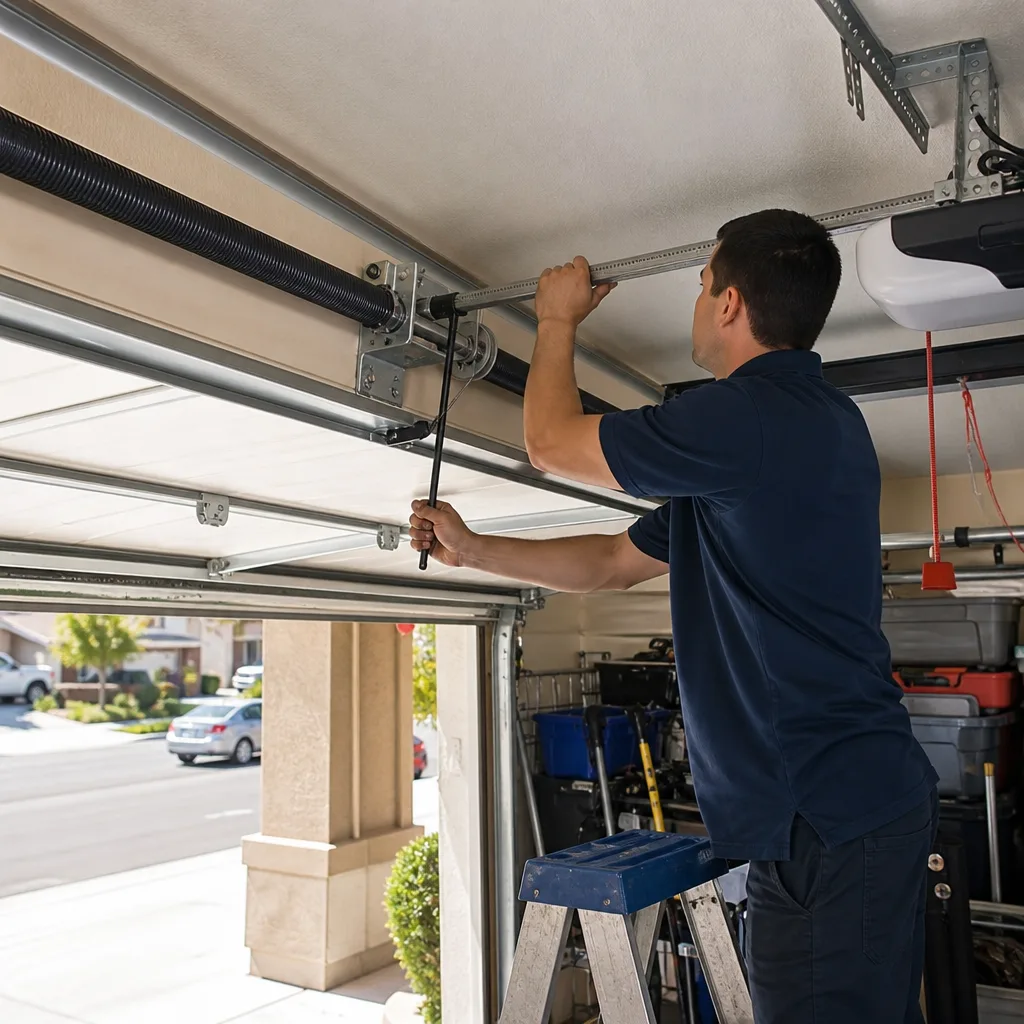 After
 Before
 After