Last updated October 31, 2026
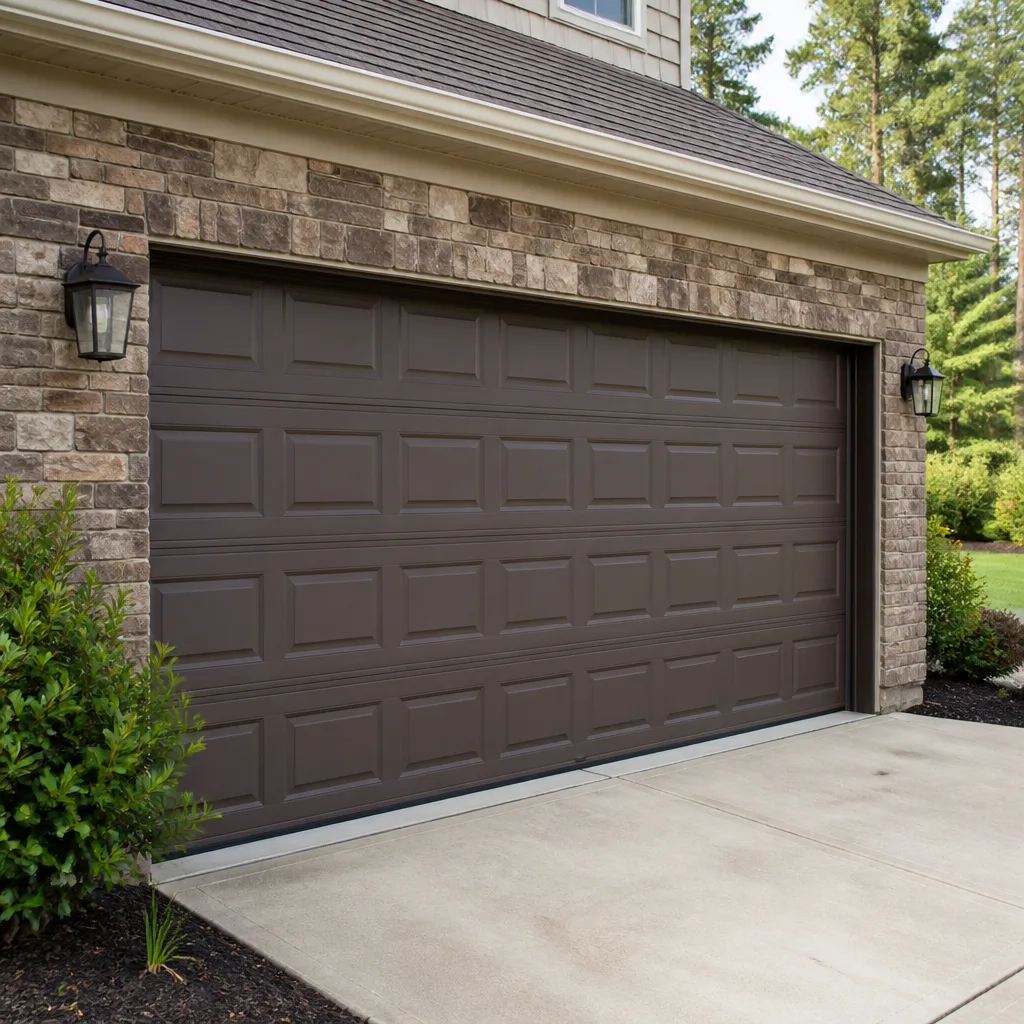 Raised-panel steel
 Carriage house
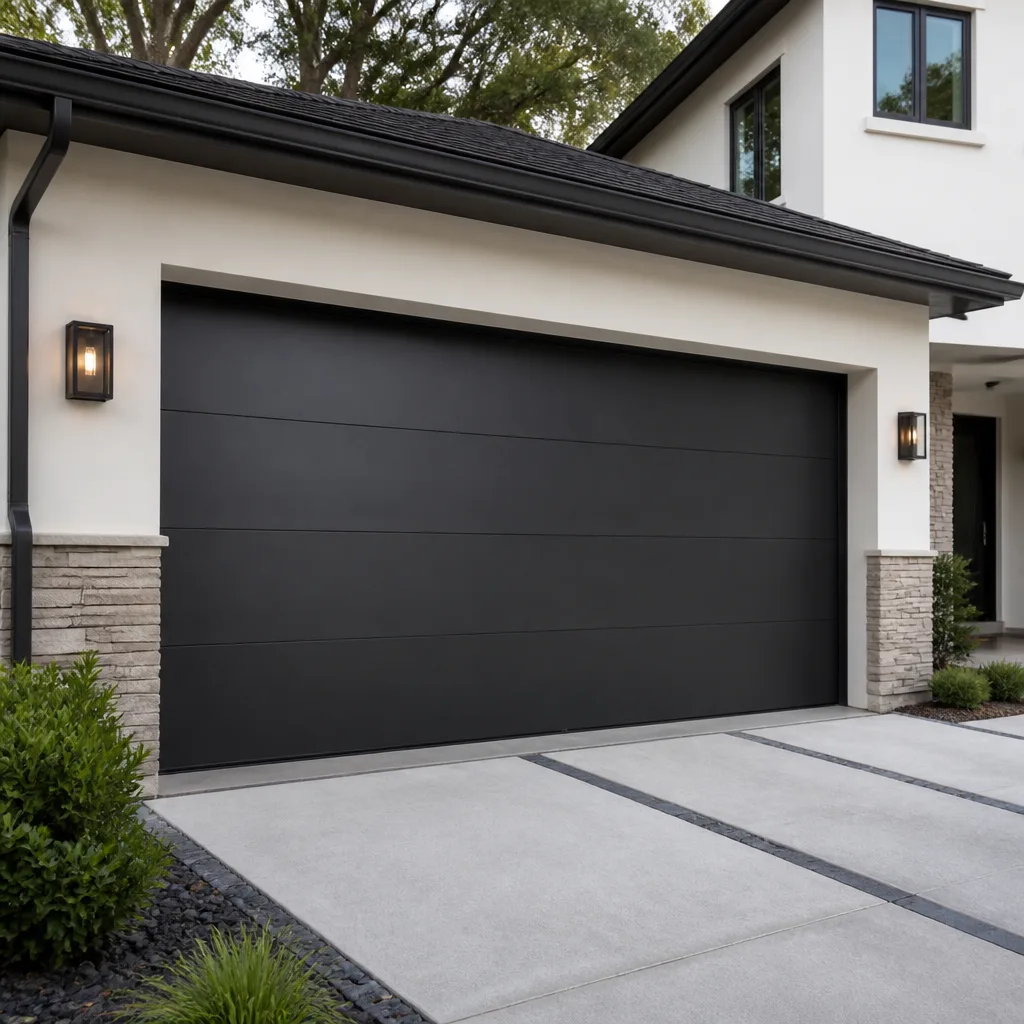 Modern flush
 Full-view glass
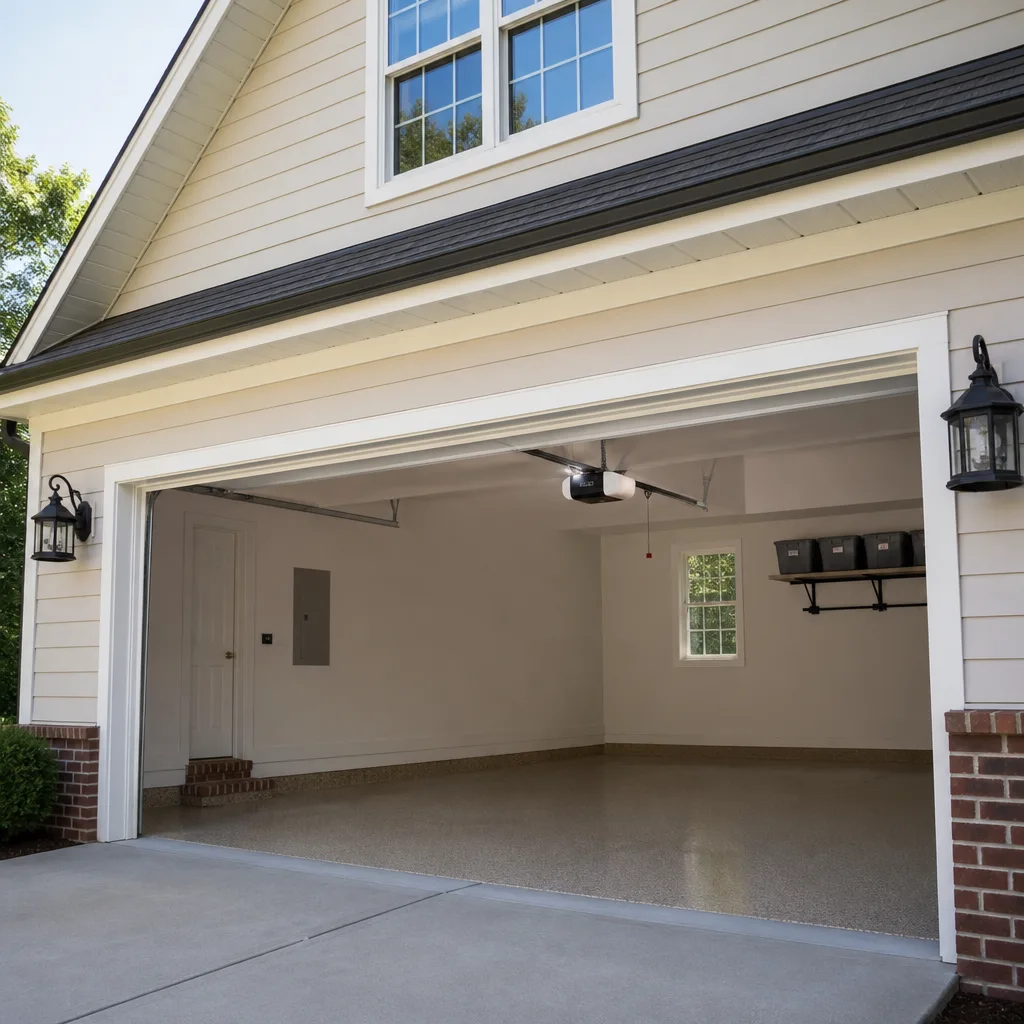 LiftMaster openers
 Chamberlain openers
Full 25-point door and opener safety check with every visit - springs, cables, rollers, tracks, and your LiftMaster or Chamberlain opener included
You get a price before we start. It does not change when the truck arrives.
Get your free estimateGarage Door Repair Maintenance Checklist for Murrieta Homeowners
Most garage door maintenance guides read like they were written by someone who has never opened a panel door in Temecula Valley heat. They tell you to “lubricate moving parts” without naming a product, they suggest a generic spring-and-fall schedule that ignores how Murrieta’s dry, hot summers punish metal and plastic differently than coastal humidity does, and they never mention that a can of WD-40 sitting on your workbench is actually a liability. This guide is different. It’s built around the exact conditions Murrieta homeowners face: 100-degree July afternoons, fine dust that works its way into roller bearings, and opener motors that cycle more often in a planned community where the garage is the primary entry point. By the time you finish reading, you’ll know exactly which products belong on your shelf, which tasks to do monthly versus twice a year, and which three garage door warning signs mean you should stop and call a specialist before a $15 problem becomes an $800 spring replacement.
Quick Answer
A proper garage door maintenance checklist for Murrieta homeowners includes a monthly visual inspection of springs, cables, and rollers; lubrication of specific moving parts with a lithium-based or silicone spray (never WD-40) twice a year before summer and before winter; a 5-second balance test and 2-inch force test to confirm opener safety settings; and a pre-summer deep check of hinges, brackets, and weather seals because Murrieta’s heat accelerates metal fatigue and rubber drying faster than most climates. Most of this takes under 20 minutes per session, and the parts that require garage door repair by a specialist should not be attempted by hand.
Styles & brands we work with
Table of Contents
- The Monthly Visual Inspection: What to Look For and What You’re Actually Looking At
- The Murrieta-Specific Maintenance Calendar: Why Summer Front-Loading Matters Here
- The Exact Lubrication Protocol: Products That Work, Products That Ruin Parts
- The 5-Second Balance Test and 2-Inch Force Test: No Tools Required
- Warranty Protection: Which Tasks Void Coverage and How to Document What You Did
- Seasonal Deep Checks: Summer Heat, Dust, and What Murrieta Does to Weather Seals
- Stop Signs: The Exact Conditions Where You Put the Wrench Down
- Common Mistakes to Avoid
The Monthly Visual Inspection: What to Look For and What You’re Actually Looking At
A garage door has about 200 moving parts, but you only need to watch about a dozen of them closely. The monthly visual inspection is the highest-value maintenance habit a Murrieta homeowner can build, because it catches issues in the stage where they’re still $20 fixes on a $400 repair. Set a recurring calendar reminder and spend ten minutes on it. We recommend doing it standing just inside the garage with the door closed, then opening it fully and standing under it while it’s up. Here is exactly what you’re checking:
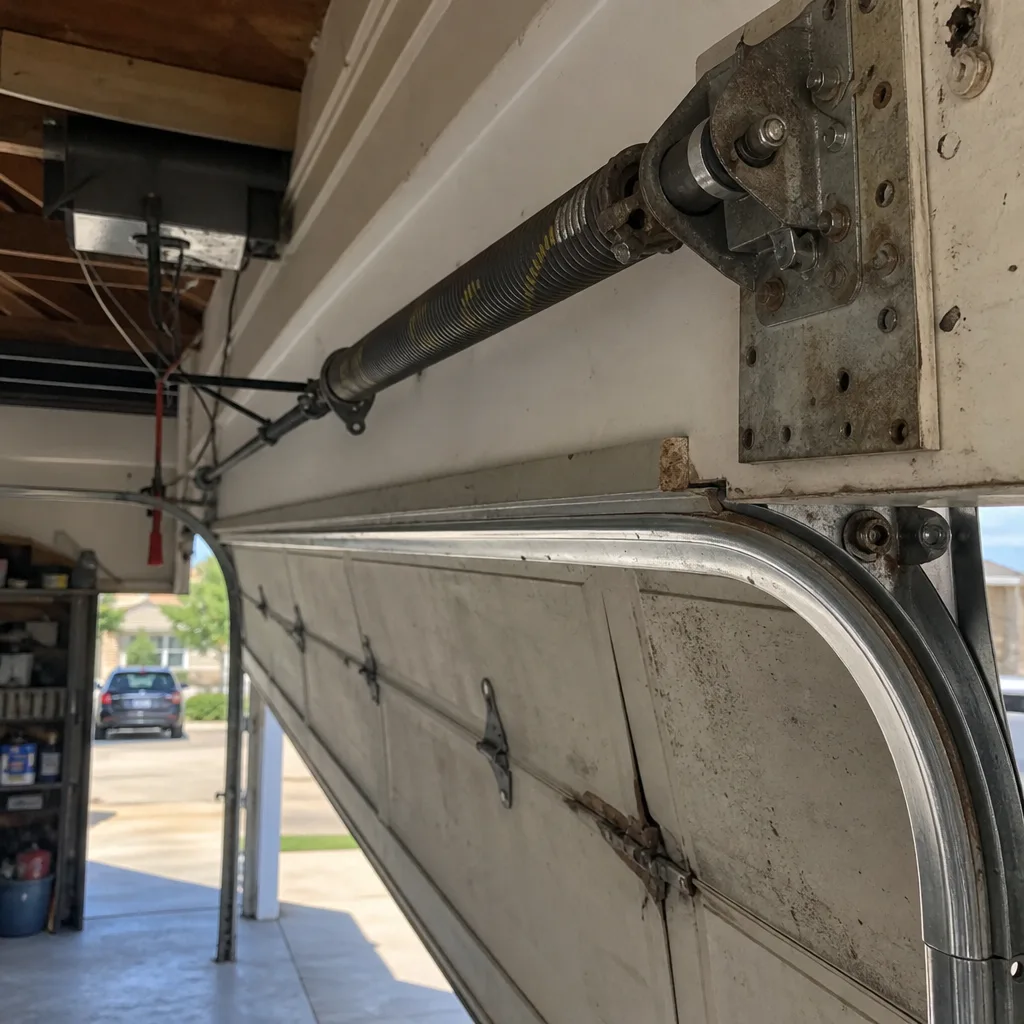
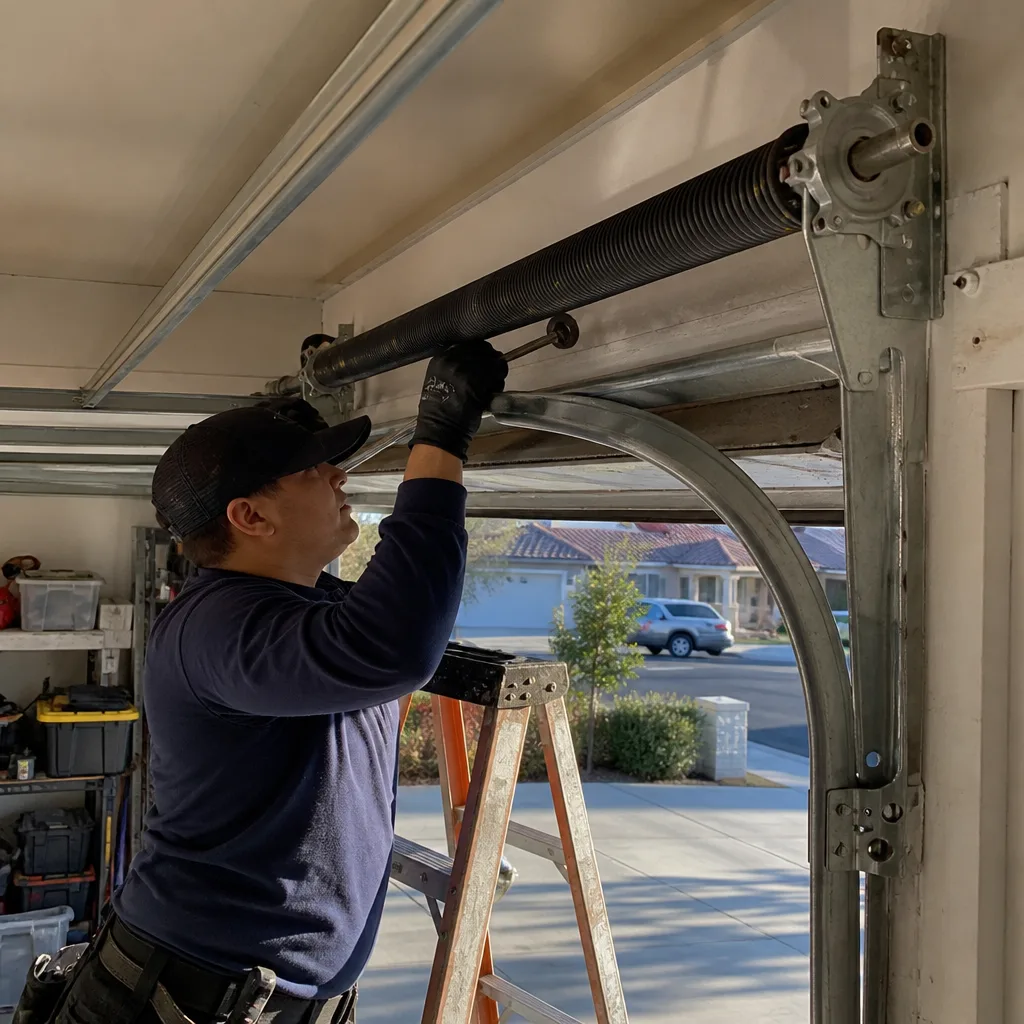
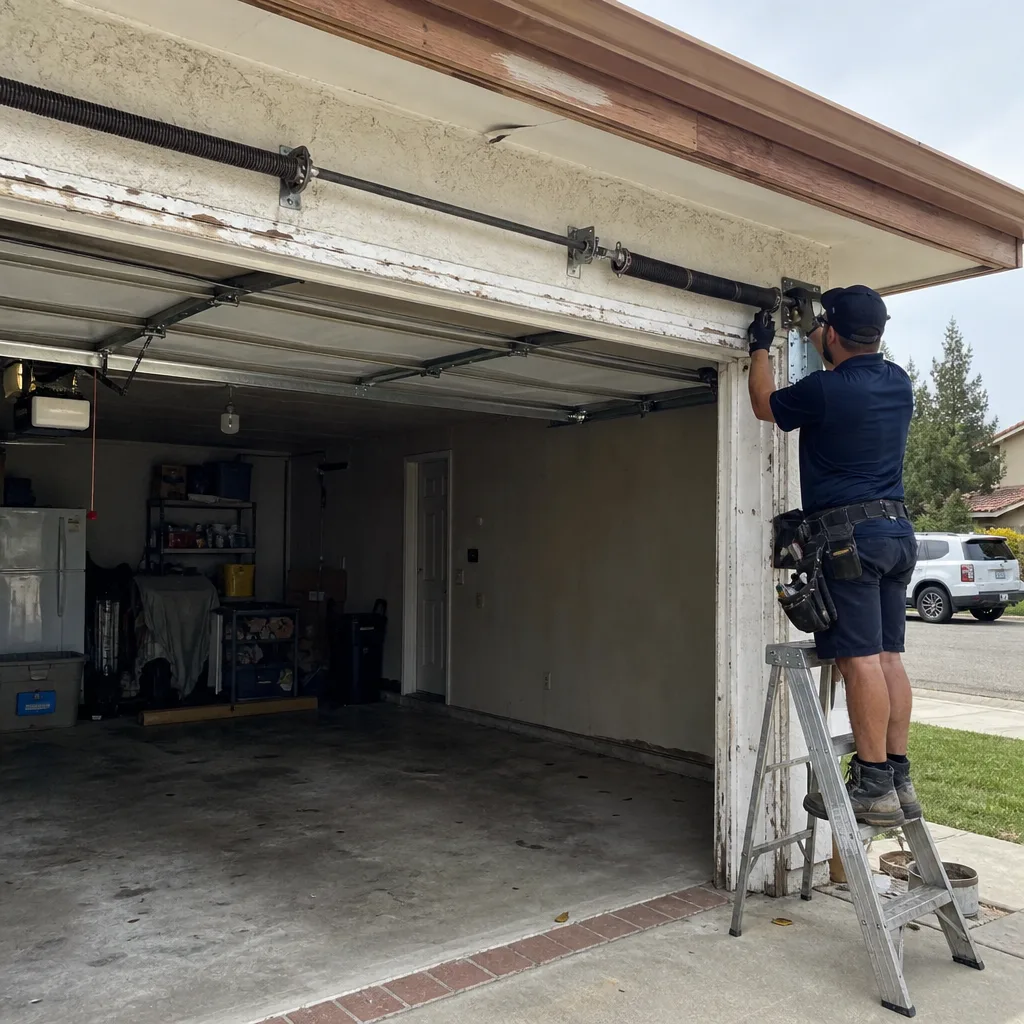
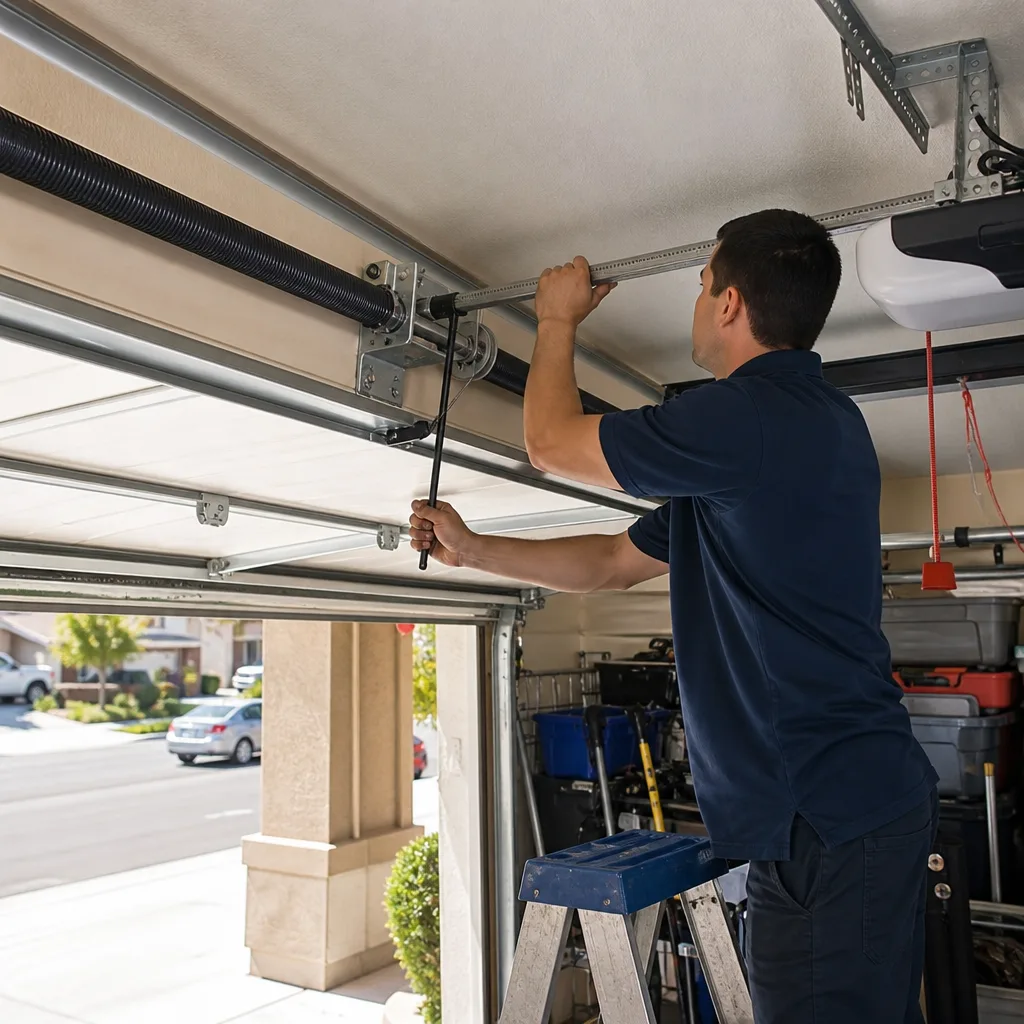
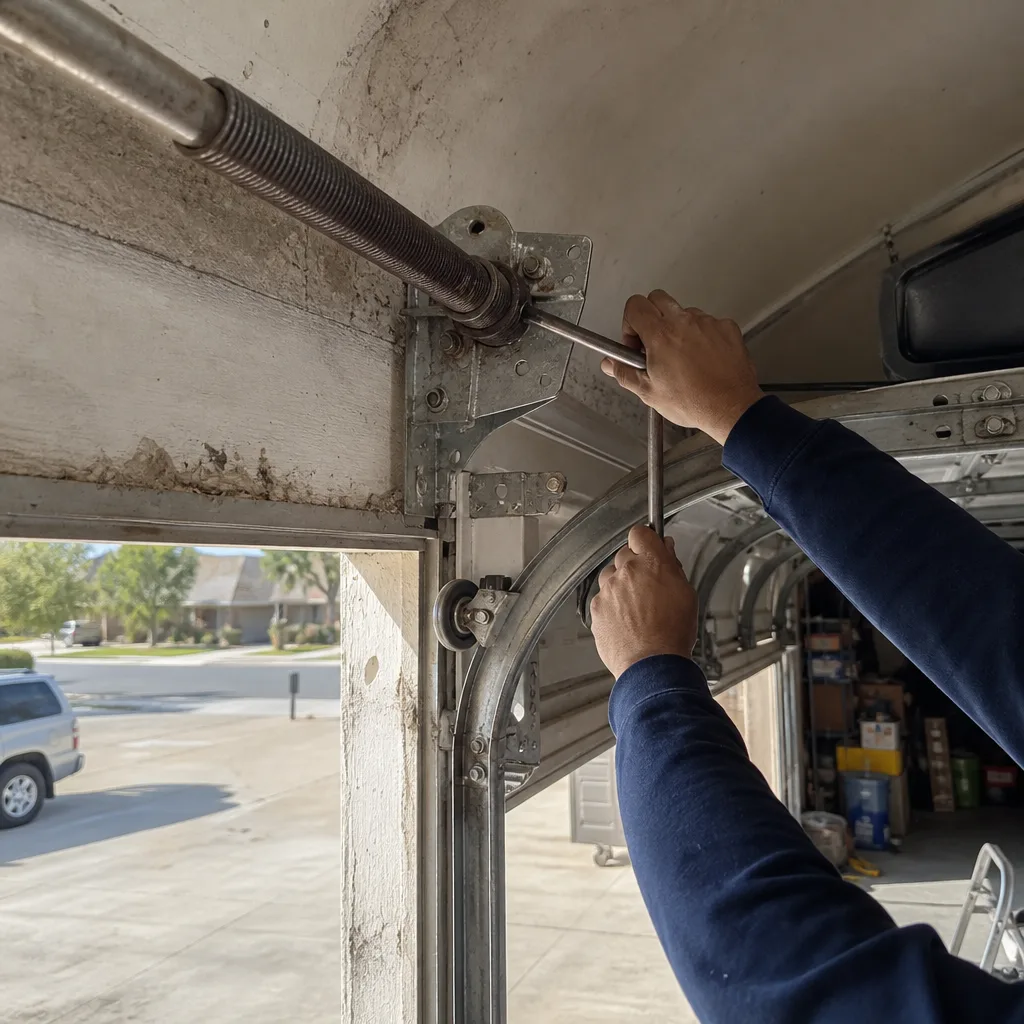
- Extension springs and torsion springs: Look for gaps in the coil spacing, rust blooms, or a visible crack. Torsion springs sit on a horizontal bar above the door when closed. Extension springs run along the top tracks on either side. A spring with a visible gap between coils is likely already broken or about to break. Do not touch it. A torsion spring holds several hundred pounds of tension, and a failure under load can be violent.
- Steel cables: The two cables that run alongside the vertical tracks should be taut when the door is moving. Look for frayed strands, kinks, or a cable that looks looser on one side than the other. A cable that chewed through a bracket or drum edge is a red flag.
- Rollers: The wheels that ride inside the track. Nylon rollers with ball bearings should roll smoothly. Steel rollers without bearings will always look a little worn, but if you see flat spots, wobble, or rollers that bind and skid instead of rolling, they’re due for replacement.
- Track alignment: The vertical and horizontal tracks should be parallel to the door edges. If one track leans or the gap between track and door is visibly different from side to side, the door is pulling against its own rails, and that stress transfers to springs and cables.
- Hinges and brackets: Look at the hinge plates on each door section and the brackets where the lifting cables connect to the bottom corners. Loose bolts, elongated holes, or sheet metal cracks around a bolt hole need attention now, not later.
- Opener chain or belt tension: A sagging chain means the opener is working harder than it should. A belt with teeth cracking means the same. Both are visible from a step stool with the door closed.
Murrieta homeowners often see fine dust accumulate on top of the horizontal track and in roller bearings, especially in neighborhoods near open lots or along the 215 corridor where construction dust is constant. That dust is abrasive. The visual check is not just about finding broken parts. It’s about catching grit before it grinds a roller down.
The Murrieta-Specific Maintenance Calendar: Why Summer Front-Loading Matters Here
Most national maintenance guides recommend a spring and fall schedule. That works in places where winter is the enemy. Murrieta’s enemy is summer. Heat is the primary accelerator of wear in this climate, not cold or moisture, and the maintenance calendar should be built around that fact. Temecula Valley summers routinely hit 95 to 105 degrees, and a garage interior can run 20 degrees hotter than the outside air. That heat accelerates rubber drying on weather seals, causes grease to thin out of roller bearings, and increases the cycle count on opener motors because the garage door becomes the main entry point for people who park in the driveway during summer months.
Here is the Murrieta-specific maintenance calendar we recommend:
- Late April through early May (the critical pre-summer window): Complete the full maintenance routine: lubrication, balance test, force test, weather seal inspection, hardware tightening. This is the single most important session of the year. It should be done before the first sustained heat wave, not during it.
- Late September through October (post-summer recovery): Second full maintenance session. Summer has already done its damage. Now you’re addressing what broke down and preparing the door for the cooler months when you’ll likely use the garage entry even more.
- Monthly (year-round): The 10-minute visual inspection described above. No lube, no tools, just eyes and a step stool.
- After any significant wind event: Santa Ana winds blow through Murrieta and the Inland Valley, and fine dust and debris find their way into tracks, hinge pins, and opener rails. Run the door once and listen for grinding or scraping.
One Murrieta-specific note: homeowners in older sections of the city, like the neighborhoods off Washington Avenue, often have single-panel wood doors that predate the current building stock. Those doors respond to heat differently than sectional steel doors. Wood expands and contracts with temperature, which means lubrication points bind more easily in summer. If you have a heavy wood door, your pre-summer session should include an extra 5 minutes checking the hinge alignment, because a bound section puts disproportionate strain on the springs.
The Exact Lubrication Protocol: Products That Work, Products That Ruin Parts
Let’s address the WD-40 problem directly, because it’s one of the most common mistakes we see in Murrieta garages. WD-40 is a water-displacing solvent first and a lubricant second. On garage door springs, it strips the existing protective coating (whether that’s a factory oil coat or a previous lubricant application), then evaporates, leaving the metal more exposed than before. That accelerates rust, especially on torsion springs that sit in the hot, dry air above the door. The product also attracts and traps dust in this climate, which creates a grinding paste on moving parts.
Here is what to use on each component, and what to never use:
- Torsion and extension springs: Use a white lithium grease spray or a dedicated garage door spring oil. Apply lightly, not heavily, to the coil surfaces. Never use WD-40, penetrating oil, or motor oil. Penetrating oils thin the factory coating, and motor oil is too heavy for this application and collects dust quickly in Murrieta’s dry season.
- Hinges and hinge pins: A silicone spray works well. Avoid lithium grease here because the overspray attracts dust onto the door panel surface.
- Rollers: Nylon rollers with sealed bearings do not need lubrication. If you have steel rollers or nylon rollers with exposed bearings, a small drop of light machine oil on each bearing is sufficient. Do not spray the roller face. Do not lubricate plastic rollers made by Clopay or similar manufacturers unless the manufacturer specifically directs it.
- Track and rails: Tracks should not be lubricated at all. A greased track causes the rollers to slide instead of roll, which increases wear and can cause the door to bind. Keep tracks clean with a dry rag or compressed air.
- Opener chain or screw drive: Use the lubricant specified in the opener manual. Most chain drives from Chamberlain and Genie take a light machine oil or a specific opener grease. Screw drives take a grease specifically formulated for that mechanism. LiftMaster openers generally have factory-lubricated belts that require no homeowner lubrication.
Apply lubricant twice a year, in late April and late September. Over-lubricating is nearly as harmful as using the wrong product, because the excess attracts dust and drips onto the door face or garage floor.
The 5-Second Balance Test and 2-Inch Force Test: No Tools Required
Your garage door opener has safety settings governed by code and by the manufacturer. When those settings drift out of range, the opener can fail to reverse when it should, which creates a safety risk for kids, pets, and anything else under the door when it closes. Two simple tests tell you whether the system is functioning within proper parameters. Neither requires a single tool.
The 5-second balance test: Pull the emergency release cord on the opener while the door is closed. This disconnects the door from the opener and lets you operate the door manually. Lift the door by hand to about waist height. A properly balanced door will stay in place, or move very slowly either way. If it drops quickly toward the floor, the springs are under-tensioned and the door is effectively too heavy for the opener, which wears the opener gear and can cause premature failure. If it flies upward on its own, the springs are over-tensioned. Both conditions need correction. After the test, re-engage the opener by pulling the release cord toward the door and running the opener once until it reconnects.
The 2-inch force test: Place a 2×4 flat on the ground directly under the door’s closing path. Close the door using the opener. When the door contacts the 2×4, it should reverse within one second and return to the open position. If the door stops, or continues pressing down, the opener’s auto-reverse is not functioning properly. That auto-reverse is the safety mechanism that prevents serious injury. Every Chamberlain, LiftMaster, Genie, and Craftsman opener made since 1993 includes this feature, but it needs to be adjusted and verified periodically. On most openers, the adjustment is made using the force dials or settings on the opener unit itself, and the owner’s manual describes the procedure. If you’re not comfortable adjusting it, or if the test fails after adjustment, check our Garage Door Repair Troubleshooting: Common Problems and How to Fix Them or call a specialist.
Run these two tests every time you lubricate and at least once more mid-summer. Heat can affect spring tension in measurable ways, and openers that spent June through August cycling 8 to 12 times a day in a 115-degree garage need to be checked.
Warranty Protection: Which Tasks Void Coverage and How to Document What You Did
Homeowners rarely think about warranty protection during routine maintenance, but three mistakes can void coverage on springs, openers, or door panels, and all three are avoidable. Garage doors installed in Murrieta commonly carry manufacturer warranties from Clopay, Amarr, or Wayne Dalton, and opener warranties from LiftMaster, Chamberlain, and Genie. Those warranties come with maintenance conditions buried in the fine print.
- Using the wrong lubricant on springs: Several spring manufacturers explicitly state that petroleum-based penetrants or solvents void the spring warranty. This is the WD-40 issue again. If you use the wrong product on a spring and that spring later fails, the manufacturer can and sometimes does deny the claim based on chemical contamination. Use only the lubricant the manufacturer specifies, and keep the product receipt.
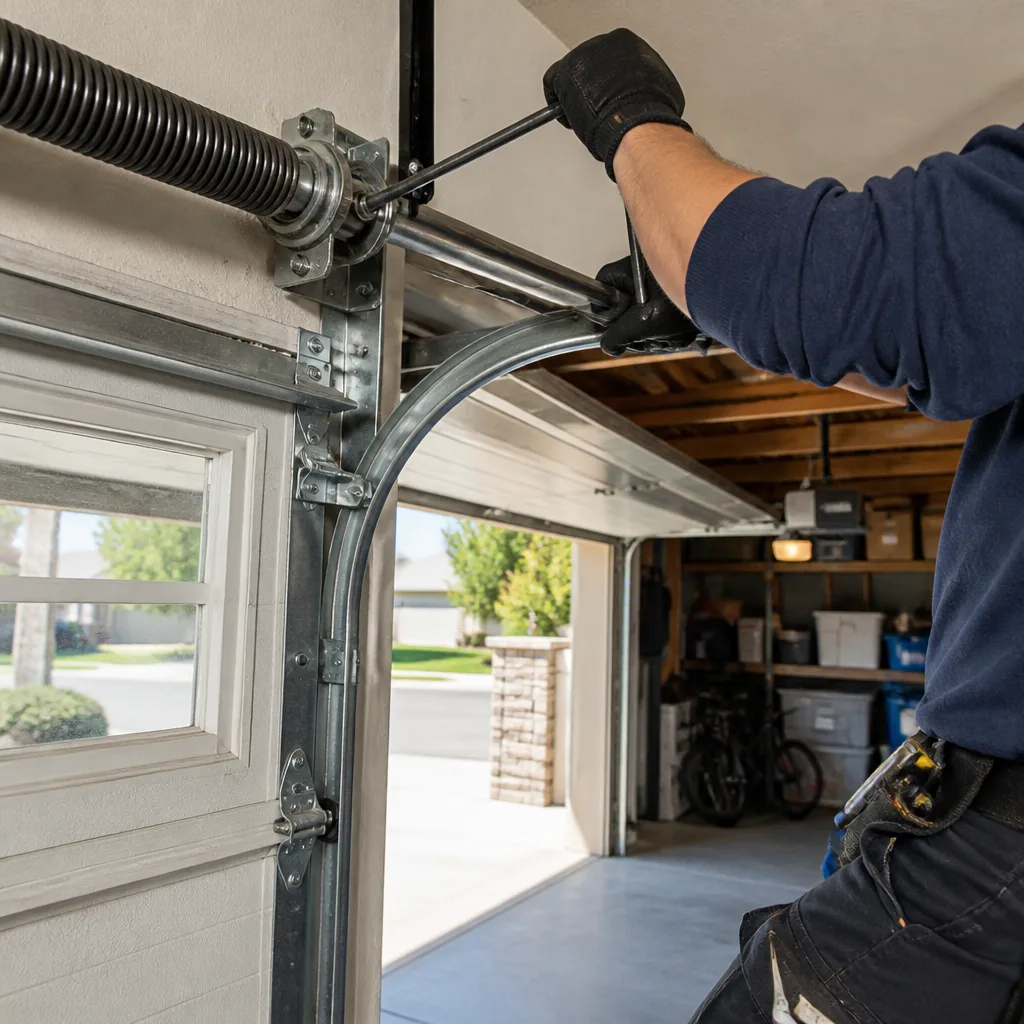
- Adjusting torsion spring tension yourself: Torsion spring adjustment is a technician-level task. If you turn the winding cones and the spring snaps, most spring warranties are void because the failure resulted from improper adjustment, not a manufacturing defect. This is also the most dangerous maintenance task on the entire door system, with a real risk of severe hand, arm, or head injury. Do not do it yourself.
- Modifying opener force settings beyond the manual’s range: Opener warranties generally cover the motor, gear, and logic board, not settings. But if you push a force setting to maximum to make a poorly balanced door work, and the opener then strips its gear or burns its motor, the manufacturer can point to the setting as evidence of improper use. The defect was really the unbalanced door, but the warranty claim still fails.
Documenting maintenance protects you in a warranty situation. Keep a simple log, either on paper or in a notes app. Record the date, what you lubricated, which products you used, and the results of the balance and force tests. If a spring fails and you need to file a warranty claim, that log shows the manufacturer you maintained the door per their instructions. We also recommend photographing your torsion springs every 6 months. A dated photo showing the spring with no rust bloom before the failure is evidence the failure was not neglect-driven.
If a warranty-covered component is failing and you want to use the warranty, contact the installer or the manufacturer before making repairs. Some warranty provisions require inspection by an authorized technician before replacement parts are approved.
Seasonal Deep Checks: Summer Heat, Dust, and What Murrieta Does to Weather Seals
Weather seals are the unsung component of the whole system, and in Murrieta they degrade on a different timeline than in coastal or colder climates. There are four primary seals on a sectional garage door: the bottom seal attached to the bottom panel, the two side seals along the vertical tracks, and the top seal above the header. All four exist to keep dust, heat, pests, and water out of the garage. In this climate, the bottom seal takes the most punishment because it sits directly on a concrete floor that can exceed 120 degrees in July, and because it gets compressed and dragged every time the door opens and closes.
Twice a year, during your pre-summer and post-summer sessions, inspect all four seals carefully:
- Bottom seal: Run your finger along it while the door is closed. It should compress evenly against the floor. Look for cracks, flattening, or sections that have pulled loose from the T-channel retainer. A flattened bottom seal lets dust and hot air in and allows air-conditioned air to escape, which is expensive in a Murrieta summer when garage-mounted water heaters and side-by-side refrigerator/freezers work against you.
- Side seals: Check that the flexible flap still makes contact with the door edge. Warped or bent tracks will create gaps, and a side seal that’s frayed or brittle from UV exposure needs replacement.
- Top seal: The least likely to fail, but still worth a quick look for cracks at the corners where it turns.
While you’re checking seals, inspect the perimeter weatherstripping around any pedestrian doors into the house and the garage side door. Those are often the bigger leak sources. But that’s a different checklist.
One more seasonal check for Murrieta specifically: dust accumulation inside the opener head unit. The circuit board and limit switches inside a LiftMaster or Chamberlain opener sit in a housing that is not sealed. Dust that gets drawn into the cooling vents can coat the limit switch contacts, causing intermittent operation. A gentle blast of compressed air into the opener’s vents once a year (with the unit unplugged) is cheap insurance. Do this in late September, after the dry season, when six months of dust has had time to settle.
Stop Signs: The Exact Conditions Where You Put the Wrench Down
Some maintenance tasks belong in a professional’s hands, and knowing the difference is as important as knowing how to do the routine work. Here are the exact conditions where you should stop and call a specialist:
- A visible crack or gap in any torsion spring. As noted, this spring holds enormous tension. Do not touch it, do not attempt to disassemble the bar, and do not open the door manually without first consulting a professional if the spring looks damaged.
- A lifting cable that has come off the drum or shows wire strands poking out. The cable is under full door weight when the door is up. A broken cable under load can whip. Call a technician.
- The door binds, jumps, or shudders during travel, and the problem is not a visible obstruction in the tracks. A door that moves unevenly often means a bent section, broken internal structure, or a failing roller assembly that requires section removal to fix.
- The force test fails and adjusting the opener settings does not correct it. This usually means the door itself is out of balance or binding, and the opener is being asked to compensate for a mechanical problem.
- Any repair that requires removing or winding a torsion spring, replacing a lifting cable, or rehanging a heavy door section. These are the injuries waiting to happen. The hospital bill for a spring recoil injury can exceed the cost of the repair by an order of magnitude.
- Water damage or visible rust on the bottom panels of a steel door. Rust is structural, not cosmetic, on a load-bearing panel. Once a panel has rusted through, it cannot be repaired, only replaced.
Garage doors are all we do. We work on the brand you already have, whether that’s a Genie opener on a Clopay door or a LiftMaster opener on an Amarr door. From spring replacement to smart-opener setup, eight brands and one specialist is the approach we bring to every Murrieta garage. See our more guides & resources for additional help. When the situation exceeds what you should safely handle yourself, that’s not a defeat. It’s the correct call.
Common Mistakes to Avoid
- Using WD-40 on springs, hinges, or rollers. It strips protective coatings, evaporates quickly, and leaves parts with less lubrication than they had before. In Murrieta’s dusty conditions, it turns into a grinding paste. This is the single most common maintenance mistake we see.
- Lubricating the track. Tracks are designed for rollers to roll, not slide. Greasing a track makes the problem worse. If the door is noisy, the issue is almost always a roller, hinge, or spring, not the track itself.
- Skipping the balance test because the opener “seems fine.” An opener can lift an unbalanced door for months or years before the gear fails. The balance test catches the imbalance early, when it’s still a spring tension adjustment instead of an opener motor replacement.
- Ignoring wall switch warning signs. If the wall button blinks or beeps when you use it, the opener is trying to tell you something. Most homeowners ignore it. The manual tells you what each blink pattern means. Five minutes of reading can save a $200 service call.
- Replacing one spring and not the other on a two-spring door. A door with two torsion springs uses matched springs. If one breaks and you replace only that one, the door is now unbalanced at the spring level, and the older spring will fail soon. Replace both, or have a professional inspect both.
- Painting over rust on a bottom panel. Rust on a steel panel is structural. Painting over it hides the problem while the panel continues to weaken. In Murrieta’s hot, dry climate, rust blooms on the bottom panel can also indicate a failed bottom seal that’s trapping moisture at the base.
- Adjusting the opener’s travel limits to “fix” a noisy or slow door. The noise is a symptom. The door is the cause. Adjusting limits is like turning up the radio to hide an engine knock. It does not fix the issue and can make it worse by over-traveling the door into the header.
See the difference
 Before
 After
 Before
 After
 Before
 After
When to Call a Professional
Call a specialist when the problem involves a torsion spring under tension, a frayed lifting cable, a door that binds or jumps during travel, or a force test that fails after adjustment. Call when you find rust on a load-bearing panel, when you hear grinding that persists after lubricating hinges and rollers, or when you don’t feel confident assessing any of the items in this guide. The danger with this system is concentrated in a handful of parts, and those parts don’t give second chances. Murrieta Garage Door Service offers free estimates in Murrieta. Call (866) 798-2664 and we’ll inspect the door, tell you what’s actually wrong, and quote the work before anything touches the door. Back in operation is the goal, and the estimate is always free.
If you’re working through this checklist and want a professional set of eyes on anything you’ve found, our Garage Door Repair in Murrieta page explains exactly how we diagnose and repair these systems. For opener-specific concerns, see Garage Door Opener Repair in Murrieta. If the door itself is too far gone and replacement makes more sense, our Garage Door Installation in Murrieta page covers the process. And for a broad look at everything we do, visit our Murrieta Garage Door Service home page.
Frequently Asked Questions
Run the monthly visual inspection every month and complete the full lubrication and testing routine twice a year: once in late April or early May before the summer heat arrives, and once in late September or October after summer ends. Murrieta’s heat is the primary wear factor, so the pre-summer session matters most. Call (866) 798-2664 if this routine turns up anything you’re not comfortable handling.
Use a white lithium grease spray or a dedicated garage door spring oil applied lightly to the coil surfaces. Never use WD-40, penetrating oil, or motor oil on springs. WD-40 strips the existing protective coating and accelerates rust, which is a bigger risk in Murrieta’s dry, dusty conditions. Call (866) 798-2664 if your springs are already showing rust and you need an assessment.
Yes. Pull the emergency release cord, lift the door manually to waist height, and see if it stays. If it drops or flies up on its own, the springs need tension correction. Do not attempt to correct torsion spring tension yourself. A torsion spring under tension is one of the most dangerous mechanical devices in a home. Call (866) 798-2664 for a spring inspection.
No. Tracks should never be lubricated. Greasing a track causes rollers to slide instead of roll, which increases wear and can cause the door to bind. If your door is noisy, the issue is more likely a roller bearing, hinge, or spring. Call (866) 798-2664 and we’ll pinpoint the noise source in one visit.
No. The price is quoted and agreed before any work starts. Our estimates are free, and the quote you receive is the price you pay unless you add additional work during the visit. Call (866) 798-2664 for a free quote on any garage door issue in Murrieta.
We work on the brand you already have. We service LiftMaster, Chamberlain, Genie, Clopay, Amarr, Wayne Dalton, Craftsman, and Raynor systems, and our diagnostic approach is brand-agnostic. If your opener can be repaired for a reasonable cost, we’ll repair it. If replacement genuinely makes more sense, we’ll show you why. Call (866) 798-2664 for an opener evaluation.
The Bottom Line
Garage door maintenance in Murrieta is not complicated, but it is specific. Use the right lubricants on the right parts and skip the WD-40. Front-load your maintenance before summer heat arrives, because the heat is what breaks things here. Run the balance test and force test twice a year. Keep a simple maintenance log. Know which tasks are safe to do yourself and which ones require a professional. This checklist, followed consistently, extends the life of your springs, rollers, and opener and prevents most of the emergency calls we see. When you hit a stop sign, call (866) 798-2664. We’ll quote the work before we start, and the estimate is free.
Written by the team at Murrieta Garage Door Service, serving Murrieta since 2014.