
Last updated October 31, 2026
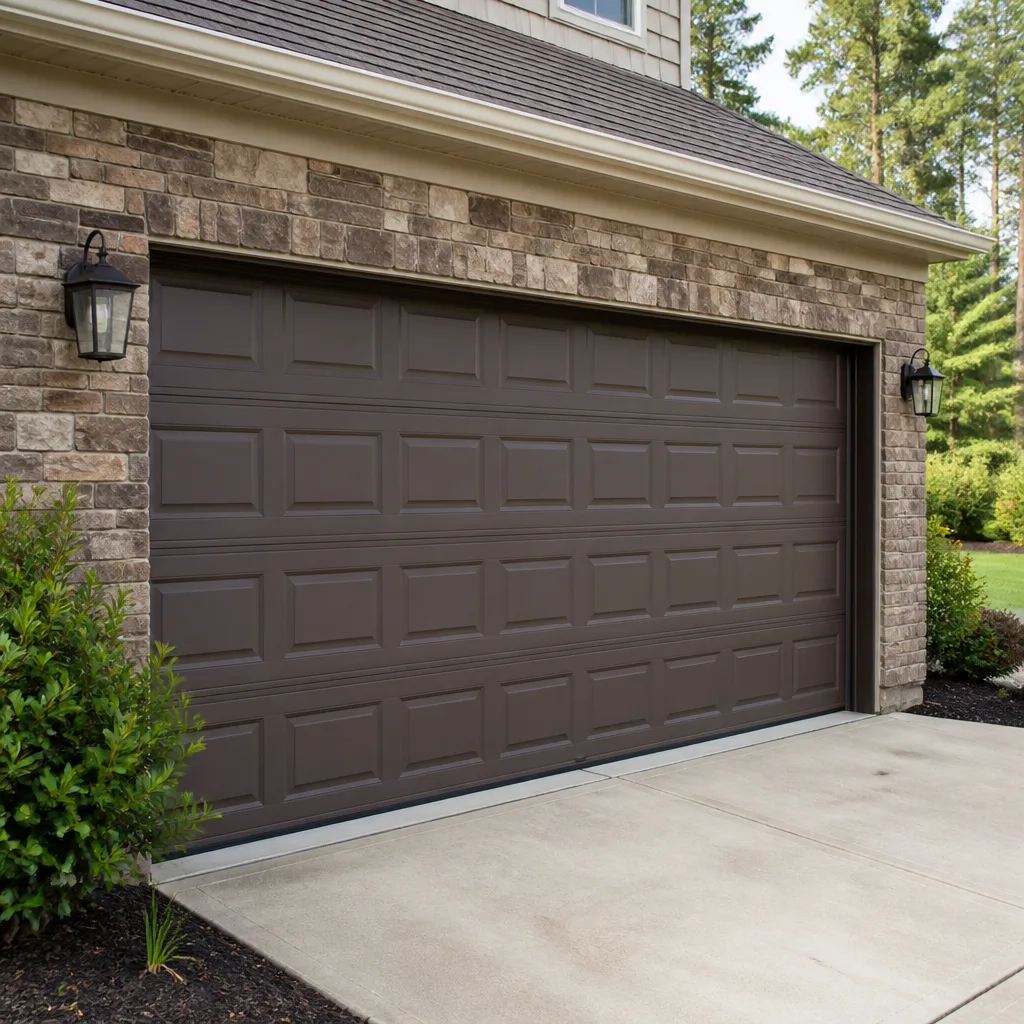 Raised-panel steel
 Carriage house
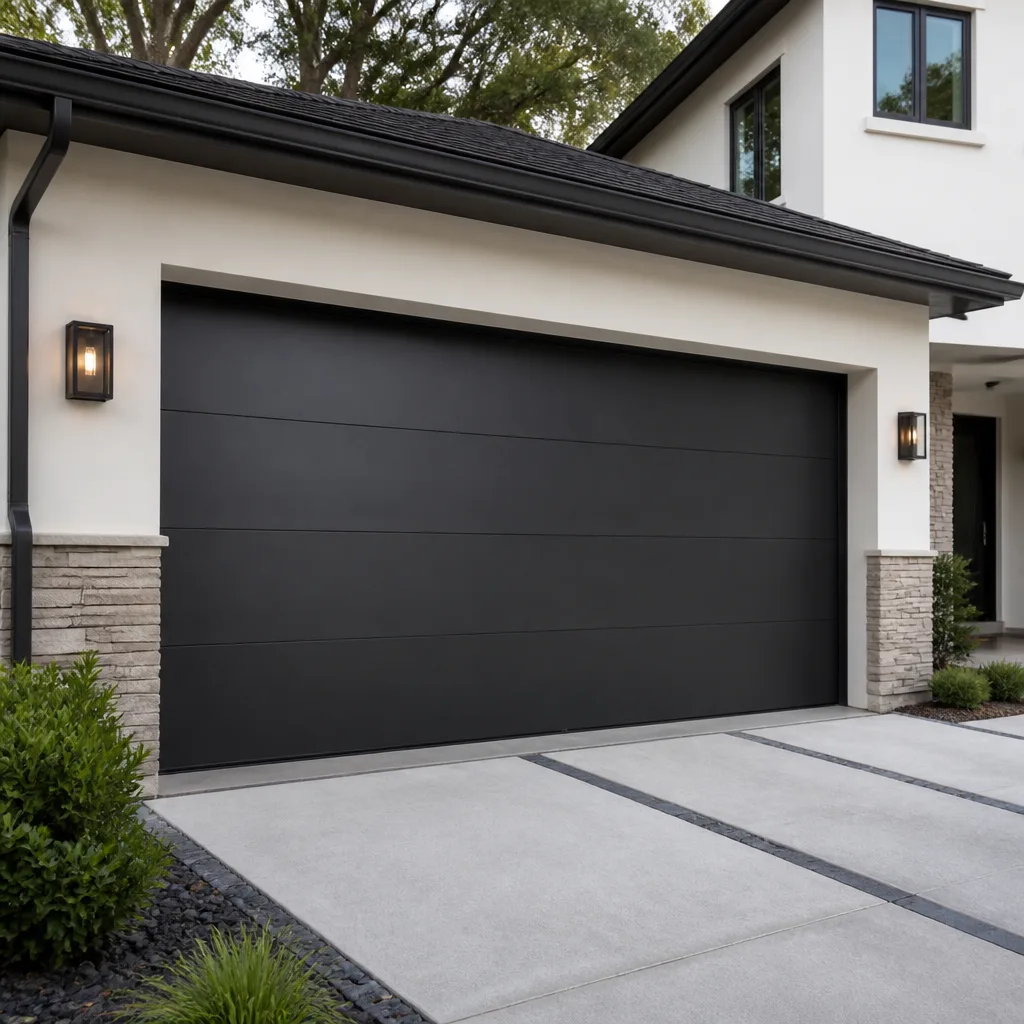 Modern flush
 Full-view glass
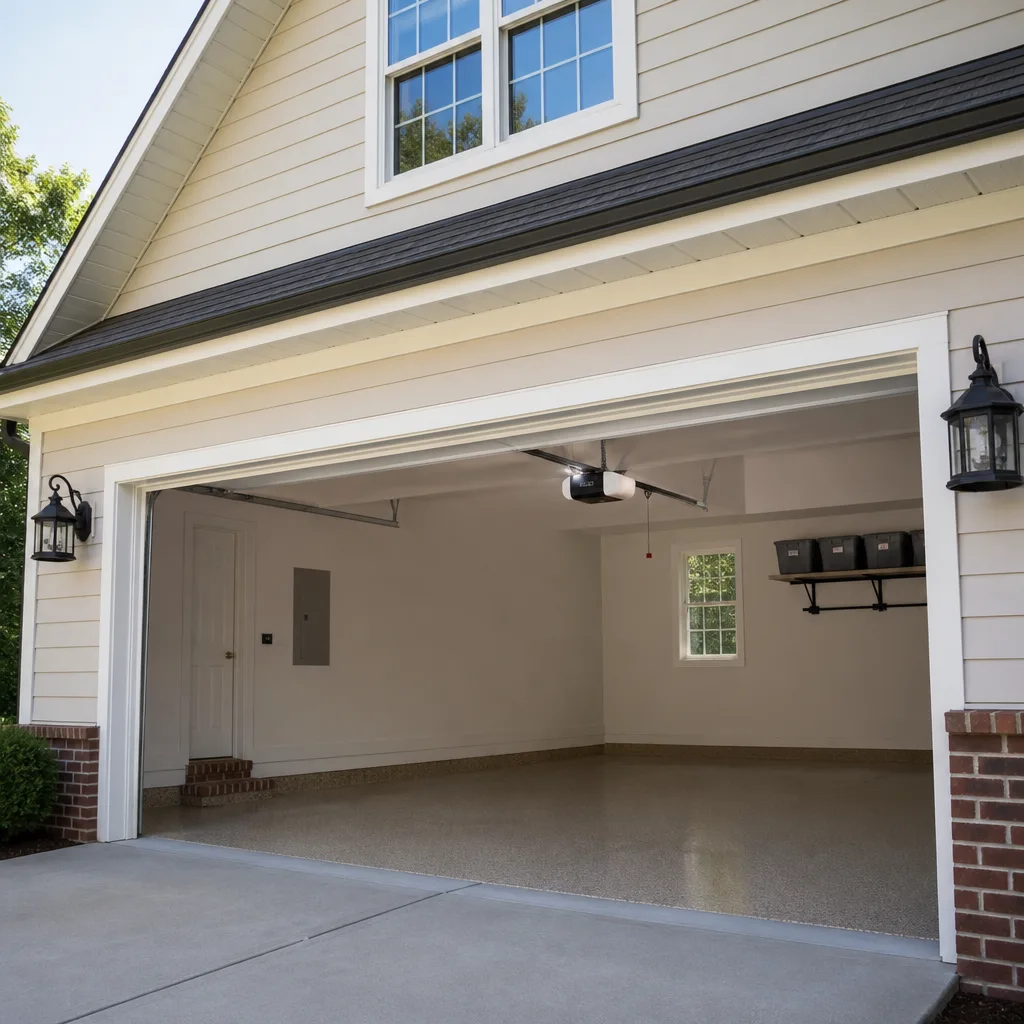 LiftMaster openers
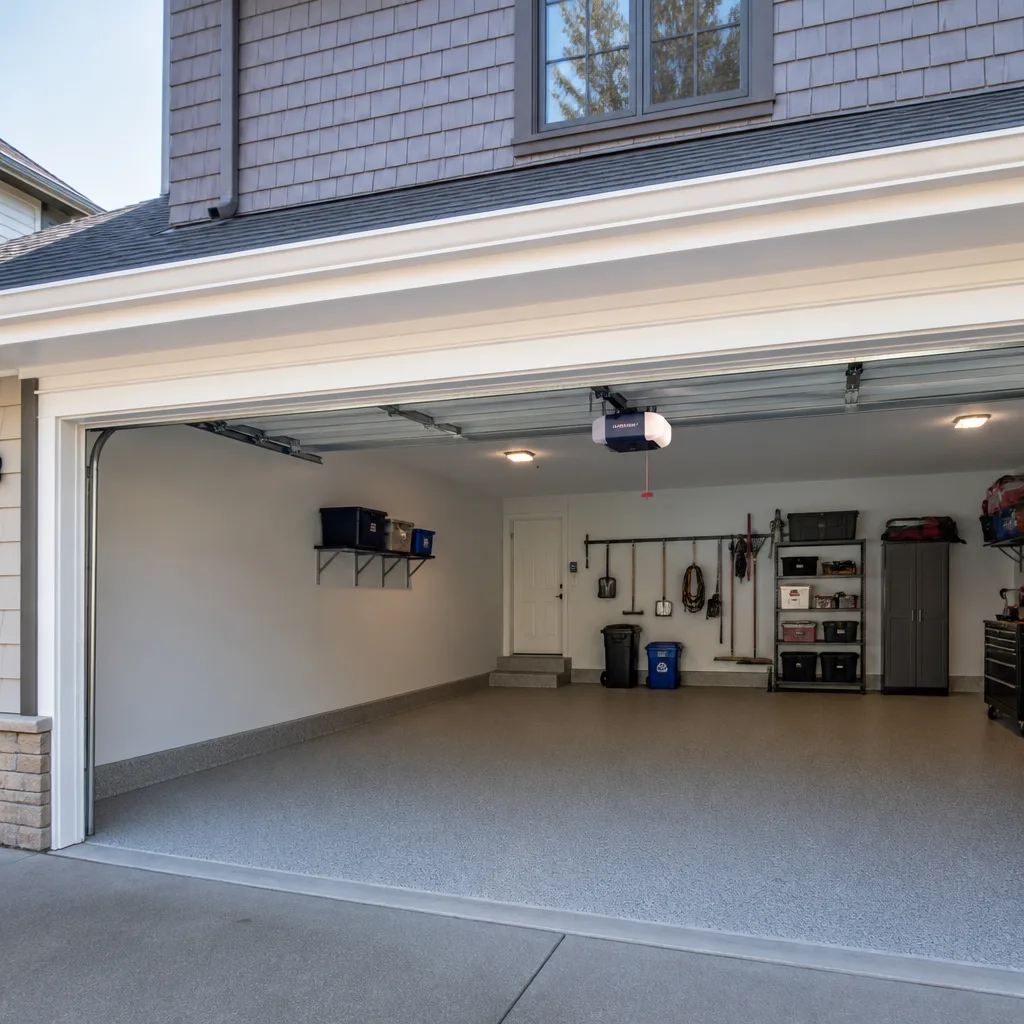 Chamberlain openers
Full 25-point door and opener safety check with every visit - springs, cables, rollers, tracks, and your LiftMaster or Chamberlain opener included
You get a price before we start. It does not change when the truck arrives.
Get your free estimateDIY vs Professional Garage Door: The Murrieta Homeowner’s Decision Guide
Torsion spring replacement sends roughly 20,000 Americans to emergency rooms each year. Most of those homeowners would describe themselves as handy. The problem isn’t skill or carelessness, it’s physics. A wound torsion spring on a two-car garage door stores enough energy to lift hundreds of pounds, and when that energy releases incorrectly, it does so in a fraction of a second. This guide exists because Murrieta homeowners deserve a clear-eyed look at which garage door tasks make sense to do yourself, which ones cross into genuinely dangerous territory, and how to know before you pick up a wrench whether you’re saving money or setting yourself up for a bigger bill. For related reading, see our Garage Door Cost Breakdown: The Murrieta Homeowner’s Reference for 2026.
Styles & brands we work with
Quick Answer
Most garage door maintenance in Murrieta is safe for a competent homeowner to handle: weather seal replacement, sensor realignment, remote reprogramming, and lubrication. Torsion spring replacement, cable work, and track realignment are not safe DIY projects, because the stored energy involved can cause serious injury. The financially rational line is this: tackle the low-risk cosmetic and electrical tasks yourself, and bring in a specialist for any job involving wound springs, cables under tension, or structural door components.
Table of Contents
- The Real Physical Risk: What Makes Garage Doors Dangerous
- The Task-by-Task Matrix: What’s Safe and What’s Not
- The Warranty Angle Most DIY Guides Skip
- Why Murrieta’s Garages Change the Calculation
- The True Cost Comparison: When DIY Actually Saves Money
- How to Save Money by Participating in a Professional Repair
- Common Mistakes to Avoid
- When to Call a Professional
- Frequently Asked Questions
- The Bottom Line
The Real Physical Risk: What Makes Garage Doors Dangerous
Garage doors look deceptively simple from the outside. A few panels, some rollers, a track, and a motor mounted on the ceiling. But underneath that clean exterior is a system that stores and releases mechanical energy at a scale most household tools never approach.
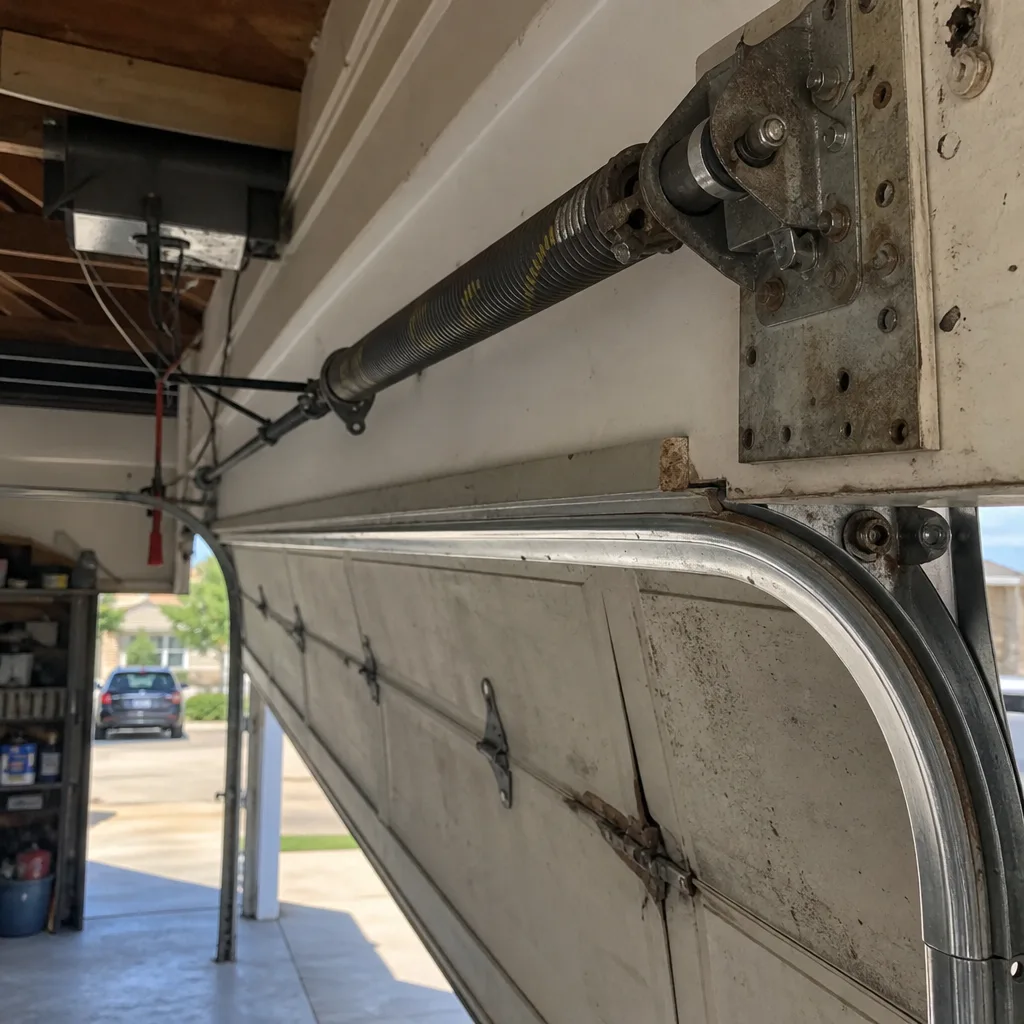
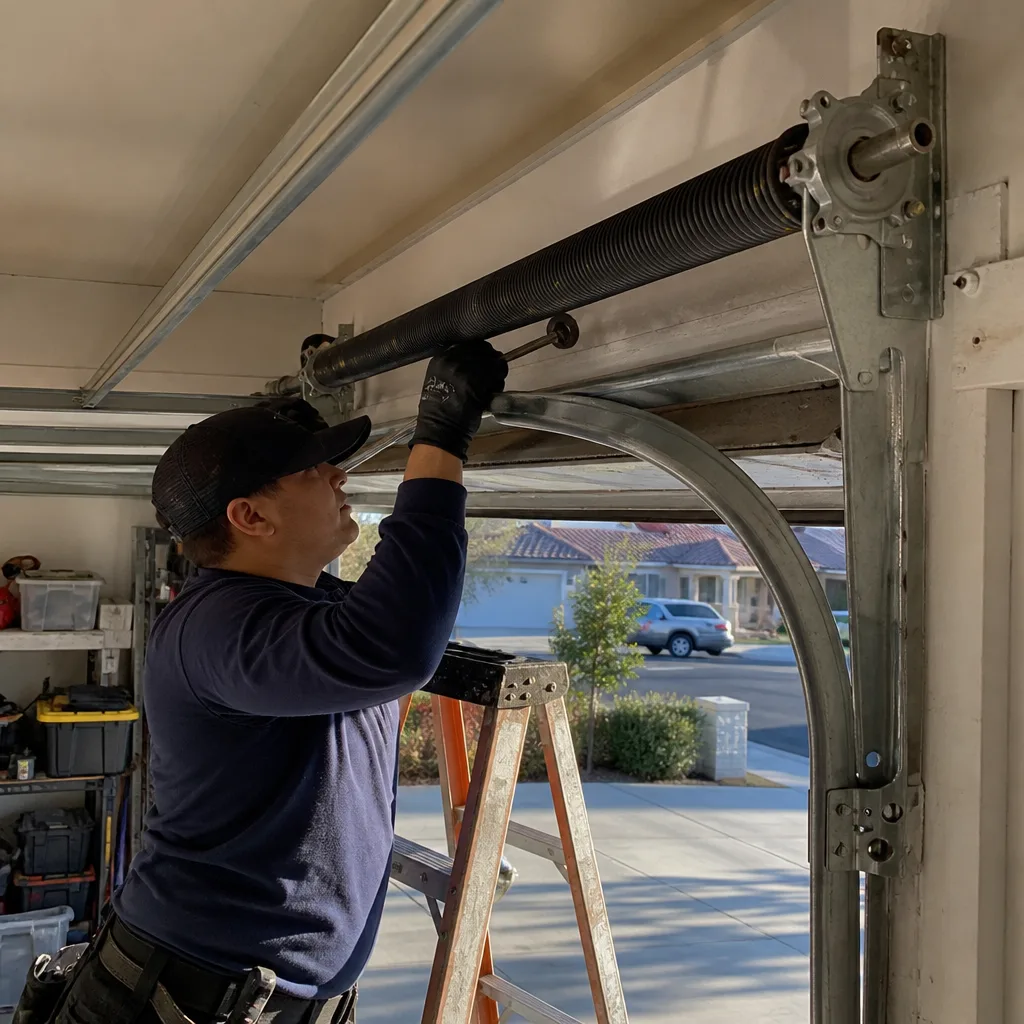
The torsion spring is the heart of the issue. On a typical two-car garage door in Murrieta, where most homes were built with 16-foot or 18-foot door openings, the torsion spring system holds hundreds of pounds of lift force in a wound coil. When the door goes up, that spring unwinds slowly and controllably. When a spring snaps while you’re working on it, or when a homeowner attempts to wind a new spring without the proper winding bars, that energy releases instantly.
The injuries we see associated with garage door work are not minor. Broken wrists, deep lacerations, facial trauma, and worse. The winding bars used to adjust torsion springs can become projectiles if the spring slips. A cable under tension can slice through gloves and skin alike.
Here’s what makes this different from most home repair risks: a dropped hammer hurts your foot. A slipped wrench scrapes your knuckle. A garage door spring failure can put you in an operating room. The margin for error on spring work is effectively zero because the energy involved doesn’t give you time to react.
Extension springs, found on some older Murrieta homes with single-car garages, are less dangerous than torsion springs but still not safe to replace casually. They stretch and contract under load, and if one breaks while you’re underneath it, the released hook can cause serious injury.
The point isn’t to scare anyone out of working on their home. It’s to draw an honest line between risk that’s manageable and risk that’s not. A power saw demands respect, but it responds to careful technique. A garage door spring demands respect and even careful technique doesn’t eliminate the danger if something unexpected happens, which is exactly when professionals earn their rates.
The Task-by-Task Matrix: What’s Safe and What’s Not
The DIY versus professional decision isn’t binary. It breaks down task by task. Some jobs are genuinely safe for a homeowner with basic tools and patience. Others cross into territory where even experienced technicians take careful precautions. Here’s the breakdown we use when homeowners ask us whether they should attempt a fix themselves.
Safe DIY Tasks for a Competent Homeowner
- Weather seal replacement: The rubber strip along the bottom of your door wears out from Murrieta heat and becomes brittle. Replacement involves pulling out the old seal and sliding in a new one. No tension, no stored energy, no specialized tools.
- Sensor realignment: Photo-eye sensors near the floor on either side of the door opening occasionally get bumped out of alignment. Realigning them involves loosening a wing nut, adjusting the sensor until the indicator light turns solid, and tightening it back down.
- Remote and keypad reprogramming: If your opener remote stopped working after a battery change or you want to add a new one, the manual has clear step-by-step instructions. This is electrical work at low voltage, completely safe.
- Lubrication: White lithium grease on the rollers and hinges, a silicone spray on the torsion spring, and a light oil on the chain. This is the single most impactful maintenance task a homeowner can do, and it takes fifteen minutes.
- Track cleaning: Wiping debris from the vertical and horizontal tracks with a rag. Do not attempt to bend or reposition the track itself, just clean it.
High-Risk Tasks That Require a Trained Technician
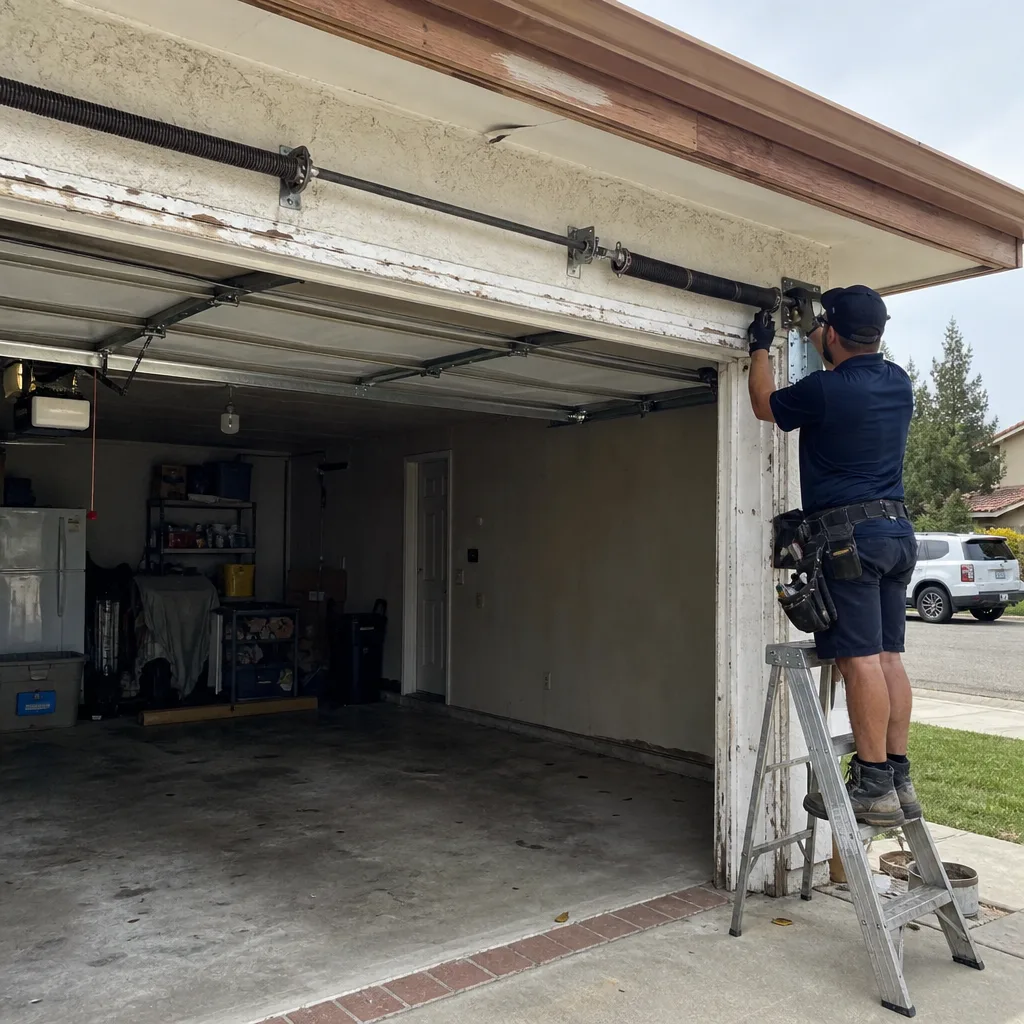
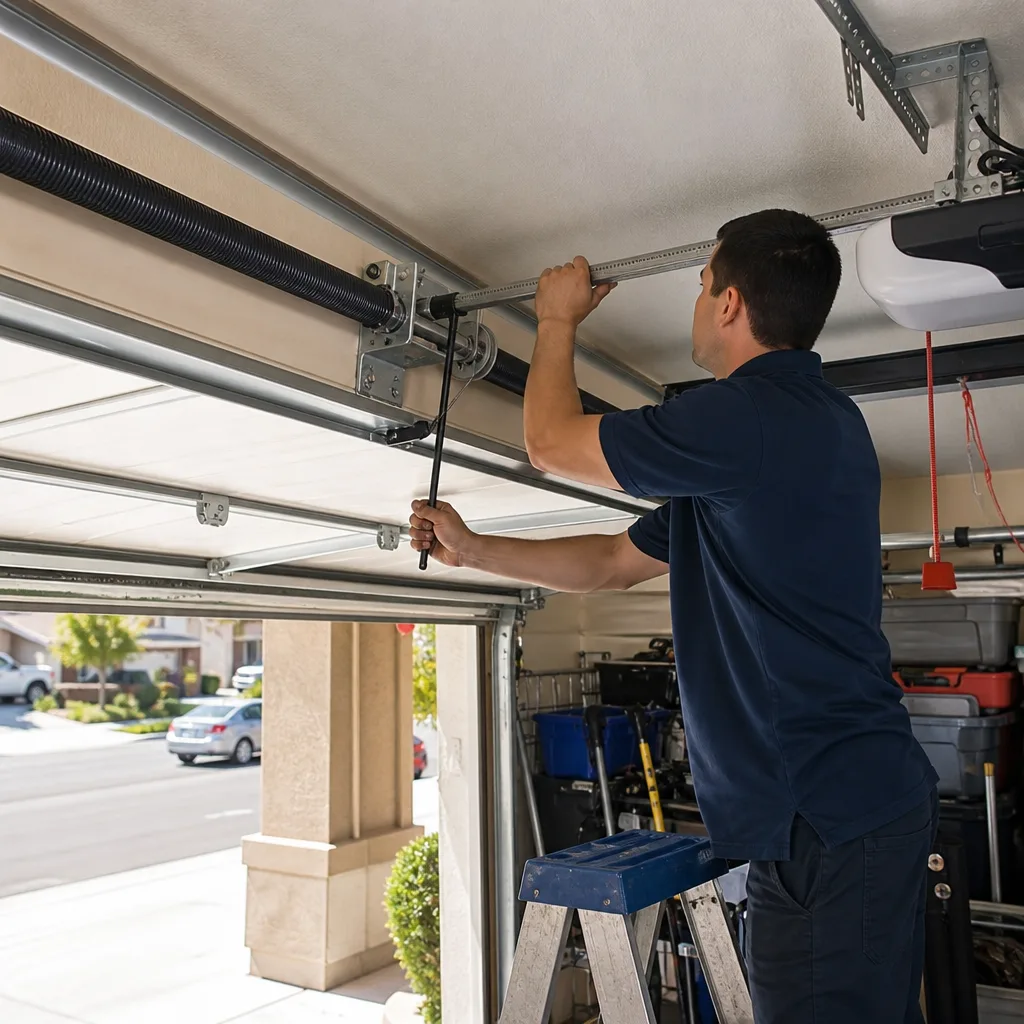
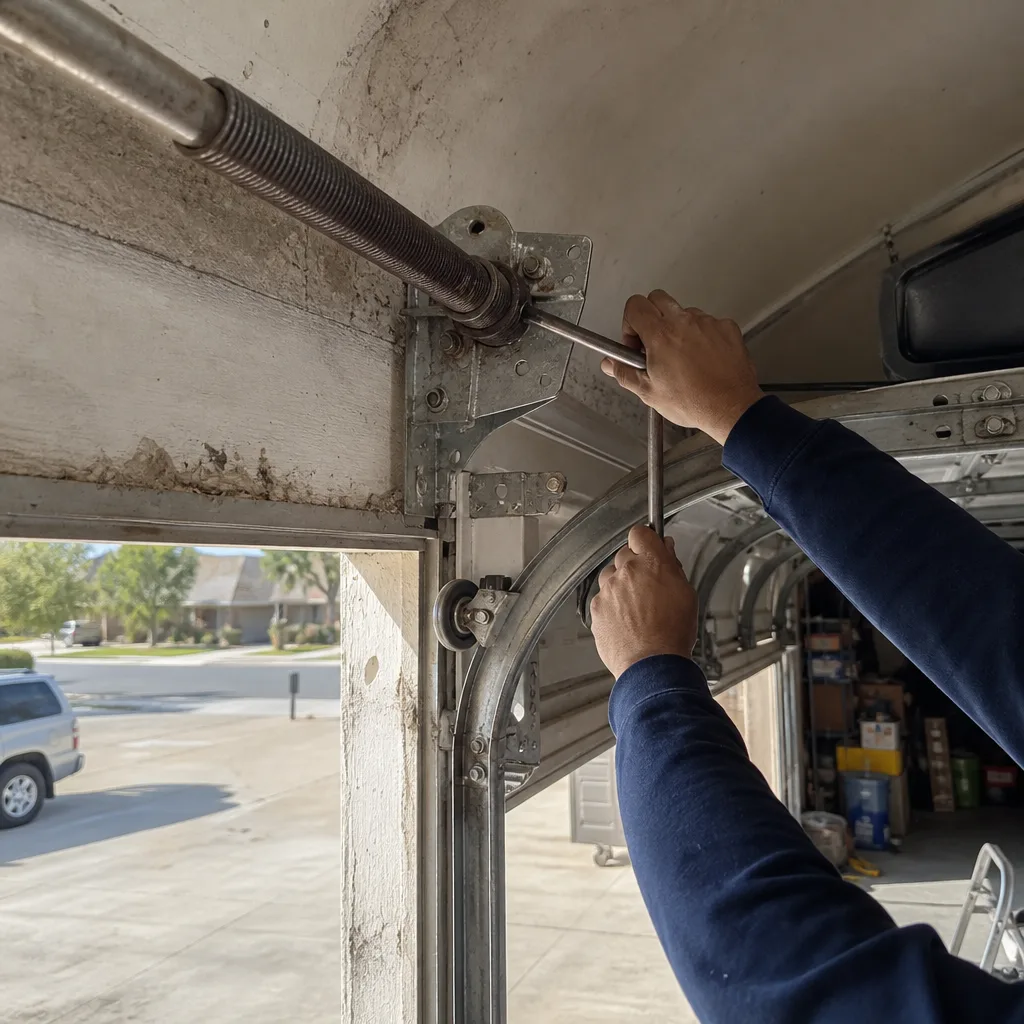
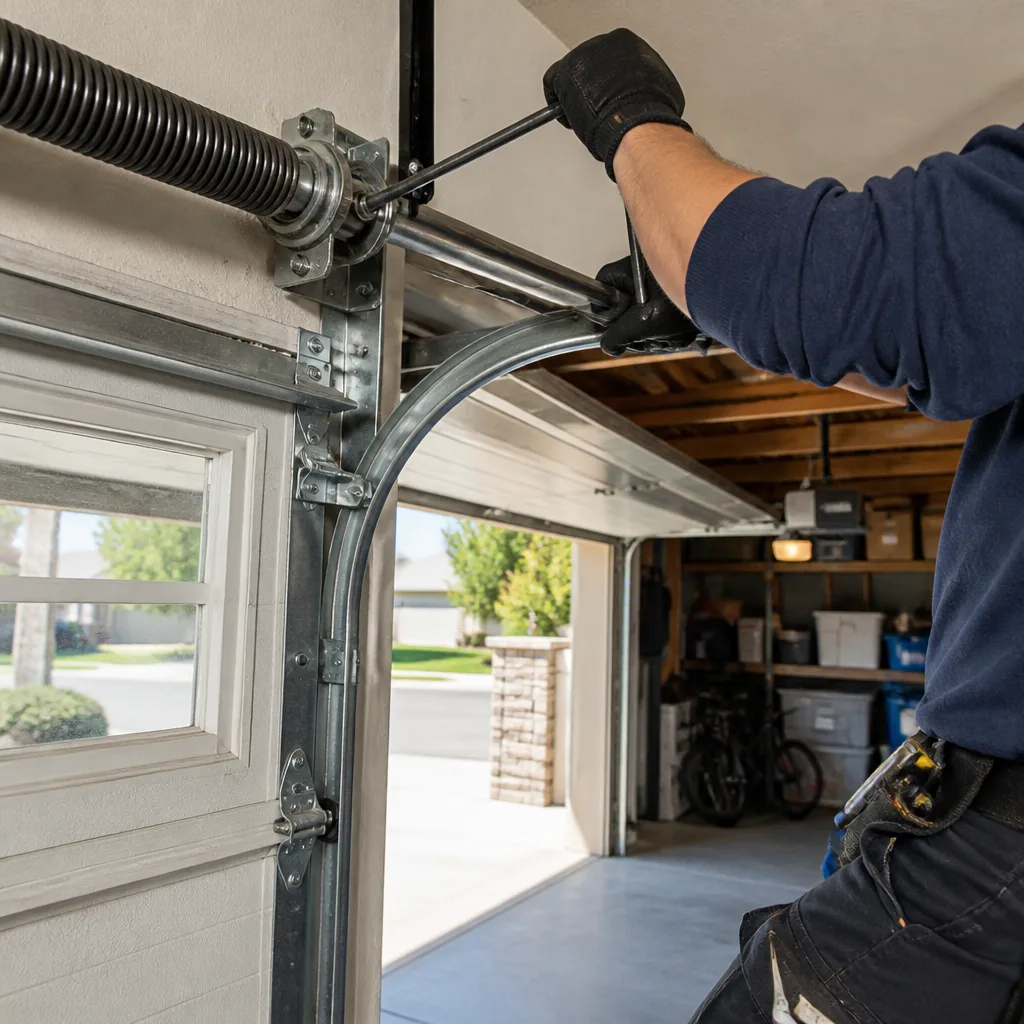
- Torsion spring replacement and adjustment: This is the one that sends people to the ER. No amount of YouTube watching changes the physics involved. A professional uses solid steel winding bars, follows a specific sequence, and carries the experience to recognize when a spring is misbehaving.
- Extension spring replacement: The older system found on some Murrieta homes. The safety cables running through these springs are there for a reason: when a spring breaks, the cable contains the shrapnel. If you’re replacing the spring, you’re working with that hazard directly.
- Cable replacement: The lift cables that run along the sides of the door are under constant tension from the springs. A frayed cable can snap during servicing, and the cable run itself requires precise routing.
- Track realignment: When a door starts binding or grinding, the track may have shifted. But adjusting tracks means adjusting the entire door system, including spring tension. You can’t safely realign a track without touching the high-tension components.
- Opener motor replacement: While the low-voltage controls are DIY-friendly, replacing the motor unit itself involves mounting, belt or chain tensioning, force settings, and safety reversal testing. Done wrong, you end up with a door that closes on someone or a motor that burns out early.
- Broken panel replacement: Individual panels on sectional doors are heavy and awkward. A misaligned replacement panel puts stress on every other component in the system.
The distinction isn’t about intelligence or capability. It’s about whether a mistake has consequences measured in dollars or in hospital visits. Garage doors are all we do, and even with that focus, our technicians approach every spring job with the same respect the first time they do it that they had the fiftieth time.
The Warranty Angle Most DIY Guides Skip
Here’s the part that rarely makes it into the typical DIY article: when you repair or replace a garage door opener yourself, you may be forfeiting the manufacturer’s warranty in the process.
Chamberlain, which also makes LiftMaster, states in its warranty documentation that the warranty applies to the original purchaser and covers defects in material and workmanship under normal use. Crucially, the warranty does not cover damage resulting from improper installation. If a Chamberlain opener fails after a DIY install and the cause traces back to installation error, you’re buying a new opener out of pocket.
Genie’s warranty language is similar. Their documentation explicitly excludes coverage for any product that has been subject to unauthorized repair, alteration, or modification. A homeowner replacing a circuit board or motor component themselves falls into precisely that category.
The practical implication is this: a $400 opener installed by a homeowner who later files a warranty claim may not have a warranty to claim against. The same opener installed by a qualified technician with documentation retains full warranty coverage for the entire warranty period.
This doesn’t apply to every component. Weather seals, remotes, and sensors rarely carry meaningful warranties worth protecting. But the big-ticket items, the opener motor and the door itself, often do. Clopay doors, for instance, carry warranties that specifically require installation by a qualified installer in order to remain valid.
When a homeowner in Murrieta tells us their DIY opener install failed and they’re looking at a second purchase, the math usually works out like this: the money they saved on the first install gets spent on the replacement unit, and the total ends up higher than professional installation would have cost in the first place.
Why Murrieta’s Garages Change the Calculation
Murrieta’s housing stock has a distinctive profile that affects the DIY versus professional calculus in ways most national guides never mention, and local regulations add another layer to consider—see our Garage Door Permits, Codes & Inspections in CA: What You Need to Know for details. The typical Murrieta home, built during the city’s rapid growth from the 1990s through the 2010s, has a two-car garage with a 16-foot or 18-foot door. That’s a heavier door than the single-car doors featured in most online tutorial videos.
The spring on a 16-foot two-car door holds significantly more energy than the spring on a 9-foot single-car door. When a tutorial video demonstrates a spring replacement on a lightweight door, the person watching in Murrieta is applying those lessons to a door and spring system that’s 40 to 60 percent heavier. That’s the hidden variable that turns a “manageable” DIY project into something far more dangerous than the video made it look.
Murrieta’s climate also plays a role. The inland heat, with summer temperatures routinely pushing past 100 degrees for weeks at a time, accelerates the breakdown of rubber components, plastic gears, and the grease inside the torsion spring. Springs fail faster in temperature extremes, which means Murrieta homeowners face this repair more frequently than homeowners in coastal communities. A spring that might last 15,000 cycles in San Diego’s temperate climate might fail at 10,000 cycles in Murrieta’s summer heat.
We also see specific failure patterns from the local environment. Dust from the nearby chaparral and open land infiltrates roller bearings and opener gears. The result is a slow grinding wear that shows up as a noisier door, a louder opener, and eventually a stripped plastic gear in the motor housing. Homeowners in Murrieta who hear a sudden grinding noise from the opener motor are often looking at heat-accelerated gear failure, a repair that requires opening the motor unit itself.
None of this makes DIY impossible. It does mean the tutorials and guides written for a generic national audience are calibrated for lighter doors, milder climates, and longer spring life. The Murrieta homeowner applying that generic advice to a heavier door in a hotter climate is operating with a misleading risk model.
The True Cost Comparison: When DIY Actually Saves Money
Honest cost comparison starts with accounting for the DIY risks that don’t show up on a receipt. A failed repair that requires a professional to undo your work almost always costs more than just calling the professional first. Here’s what the numbers look like in practice.
DIY Jobs That Genuinely Save Money
- Weather seal replacement: The seal itself runs $20 to $40 at a local hardware store. Professional replacement might cost $100 to $150 including the part and labor. DIY savings: $60 to $110, with essentially zero risk.
- Sensor cleaning and alignment: A can of compressed air and a screwdriver. Professional service call in Murrieta for the same fix: $75 to $125. DIY savings: nearly the entire amount, assuming the sensors aren’t actually failing.
- Remote programming: Following the manual takes ten minutes and costs nothing. A service call for the same task runs $50 to $100. DIY savings: complete.
- Lubrication: A can of white lithium grease costs under $10 and lasts multiple applications. Professional lubrication service: $75 to $150. DIY savings: $65 to $140 per application, and this is the single best maintenance investment you can make.
DIY Jobs That Cost More Than They Save
- Torsion spring attempt: The spring itself costs $40 to $100. But when a homeowner accidentally releases the spring tension incorrectly, seizes the spring on the tube, or damages the cable drum, the professional repair now includes undoing the amateur work plus the original repair. Total cost typically lands 50 to 100 percent higher than if the professional had been called first.
- Opener motor replacement: The opener unit costs $250 to $500. Installation done incorrectly means stripped gears, misaligned force settings, or a door that reverses when it shouldn’t. When a Murrieta homeowner calls us after a failed DIY opener install, we’re often replacing stripped internal components on a brand-new unit. The second call wipes out any first-call savings.
- Cable replacement: The cable itself is under $20. The danger and the precision routing required make this a job where the savings evaporate the moment something goes wrong.
The pattern is clear. Jobs where the part is cheap, the tools are common, and the failure mode is “it doesn’t work and I try again” are good DIY candidates. Jobs where the part is cheap but the failure mode is physical injury or cascading system damage are not, because the downside risk dwarfs the upside savings.
How to Save Money by Participating in a Professional Repair
Most homeowners don’t realize they can reduce a professional repair bill by handling the prep work that doesn’t require specialized knowledge. When you call a garage door specialist in Murrieta, here’s what you can do before and during the visit to cut billable labor time.
1. Clear the Work Zone
Before the technician arrives, move vehicles out of the garage, clear tools and boxes away from the door area, and open up at least six feet of working space in front of and under the door. If the technician doesn’t need to spend 15 minutes asking you to move things, that’s 15 minutes of labor you didn’t pay for.
2. Have Your Information Ready
Know the brand of your door and opener before calling. LiftMaster, Chamberlain, Genie, Clopay, Amarr, Wayne Dalton, and Craftsman each have specific quirks, and knowing which system you have helps our team bring the right parts on the first trip. If you can find the model number on the opener motor housing, even better. This is where our opener repair service in Murrieta benefits from a knowledgeable homeowner who can identify their equipment.
3. Document the Problem
Take a short video on your phone of the door behaving badly. A 10-second clip of the door grinding, hesitating, or making an unusual noise gives the technician a head start on diagnosis. Written notes about when the problem started and whether it’s worse at certain times of day help too.
4. Test the Simple Things First
If the door won’t open, check whether the opener has power and whether the manual release cord is engaged. If the remote stopped working, try the wall button. Eliminating the obvious variables before you call saves the technician from spending billable time on diagnostics you could have done yourself.
5. Ask About Winter Versus Summer Cycling
Murrieta’s temperature swings mean your door operates differently in January than it does in August. Mentioning whether the problem is seasonal helps the technician zero in on the right component faster.
None of this requires mechanical knowledge. What it requires is being a prepared client, and prepared clients get faster repairs. For homeowners in Murrieta, faster repairs at an hourly rate directly translates into lower bills.
Common Mistakes to Avoid
- Attempting spring work with substitute tools. Winding bars are not interchangeable with screwdrivers or pry bars. A homeowner who decides a long screwdriver is “close enough” is holding a projectile in waiting. The specific diameter and length of winding bars exist for a reason.
- Disconnecting the opener before relieving spring tension. When you pull the release cord on an opener while the door is under spring load, the door can slam down. Homeowners who disconnect the opener to “work on the door” without first securing the door position have created a falling hazard.
- Resetting safety reversal settings after a DIY opener install. The safety reversal mechanism that stops a closing door when it hits an obstacle is required by federal law for a reason. Homeowners who disable or misadjust this setting to fix a door that won’t close are trading a functional inconvenience for a genuine safety hazard.
- Replacing only one spring when both are worn. Torsion springs have a rated cycle life, and springs installed as a pair wear as a pair. When a Murrieta homeowner replaces only the broken spring and leaves the other one, the old spring fails soon after and the door is out of service again. This is the single most common DIY mistake we see on spring replacement callbacks.
- Ignoring the gradual warning signs. A door that’s getting louder, slower, or jerkier is telling you something. Murrieta homeowners who wait for complete failure often end up replacing components that could have been repaired if caught earlier. The cost difference between a spring replacement and a spring replacement plus a cable and drum replacement is several hundred dollars.
- Buying parts before confirming the actual failure. A homeowner who assumes a broken spring because “the door won’t open” might order a spring online, wait three days for delivery, and then discover the actual problem is a stripped opener gear. The part sits on the shelf, the door remains broken, and the professional repair still needs to happen.
When to Call a Professional
Call a professional the moment you see or hear any of the following: a torsion spring with a visible gap in the coil, a frayed or kinked lift cable, a door that came off its track, an opener motor that grinds but won’t move the door, or any situation where you’ve already attempted a fix and the problem persists. For guidance on spotting these warning signs early, see our Garage Door Emergency Preparedness Guide for Murrieta Homes. These are not sequential problems that get worse gradually. They are failures that can cause injury or property damage without warning.
Beyond the emergencies, call a professional when a door is more than ten years old and has never had a spring replacement. The wear patterns on aging doors create compounding issues that a trained eye catches in minutes and an untrained eye misses entirely. We work on the brand you already have, from complete garage door repair in Murrieta to full garage door installation, and a free estimate means you can get a clear picture of the problem before committing to anything. Call (866) 798-2664.
Frequently Asked Questions
Garage door spring replacement in Murrieta typically costs $180 to $340 depending on the door weight, spring type, and whether you’re replacing one spring or both. The exact price is quoted and agreed before any work starts. Call (866) 798-2664 for a free estimate and we’ll give you the specific number for your door.
We don’t recommend it. The stored energy in a torsion spring is enough to cause serious injury, and even experienced homeowners misjudge the risk because the spring looks like a simple metal coil. The winding process requires specialized bars and specific technique, and mistakes don’t give you a second chance.
In many cases, yes. Chamberlain, LiftMaster, Genie, and Clopay warranty documentation all exclude coverage for damage resulting from unauthorized repair or improper installation. A professional installation preserves your warranty coverage; a DIY attempt often forfeits it.
Lubricate the rollers, hinges, and springs every six months with white lithium grease and silicone spray. Replace the bottom weather seal when it becomes brittle. Clean the photo-eye sensors and keep the tracks free of debris. These tasks prevent most premature failures and cost under $30 a year total.
Murrieta’s summer heat accelerates spring fatigue compared to coastal communities. A spring rated for 10,000 cycles might reach the end of its life in 7 to 9 years of typical Murrieta use, whereas the same spring might last 10 to 12 years in a milder climate. If your home is approaching a decade with original springs, budget for replacement now rather than waiting for the failure.
No. The price we quote is the price you pay unless you approve additional work in writing after the technician identifies a separate issue. If we discover a cable that also needs replacement, we’ll show you the worn part, explain the recommendation, and let you decide. Nothing gets added to the bill without your sign-off.
The Bottom Line
The DIY versus professional decision for garage doors comes down to a clear risk line. Weather seals, sensors, remotes, and lubrication are homeowner territory. Springs, cables, tracks, and opener motors are professional territory. The line doesn’t move based on how handy you are; it’s set by the physics of stored energy and the warranty language in manufacturer documentation. Murrieta’s heavier two-car doors and hot climate tilt the calculation further toward professional service for anything involving the spring system. When a job crosses that line, garage door opener repair and spring work from a specialist costs less than the alternative. For everything else, a can of lubricant and fifteen minutes of your time keeps the system running right between service calls. Call (866) 798-2664 for a free estimate on any repair in Murrieta. See our Murrieta Garage Door Service home page for the full range of what we cover.
Written by the team at Murrieta Garage Door Service, serving Murrieta since 2014.
See the difference
 Before
 After
 Before
 After
 Before
 After