
Last updated October 31, 2026
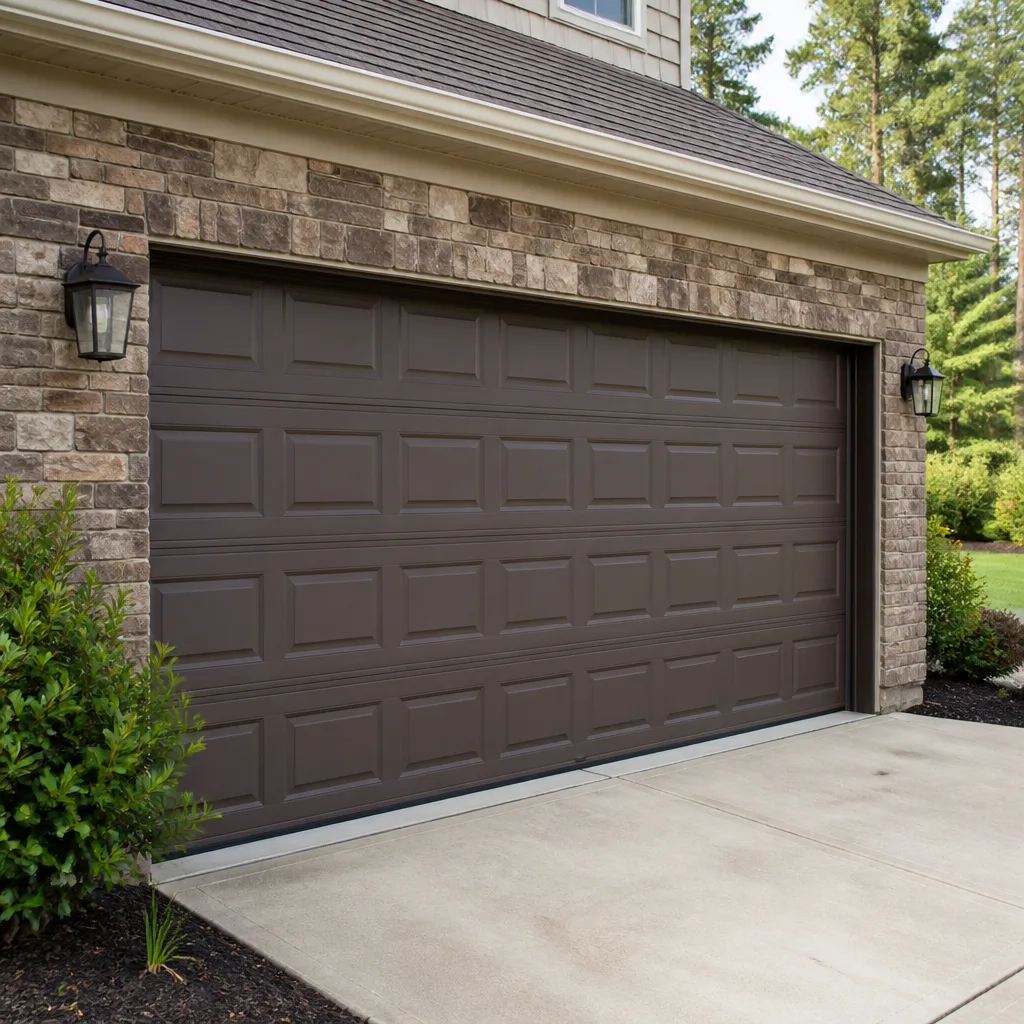 Raised-panel steel
 Carriage house
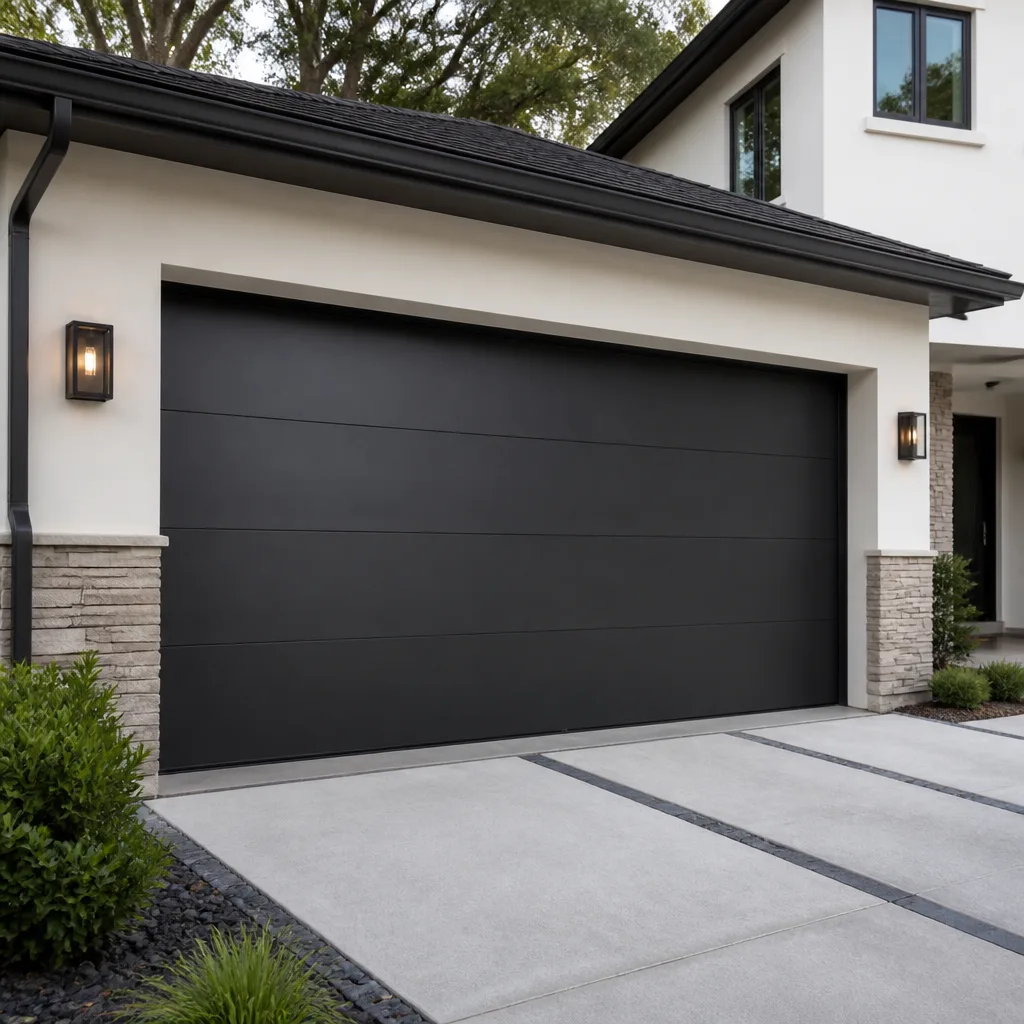 Modern flush
 Full-view glass
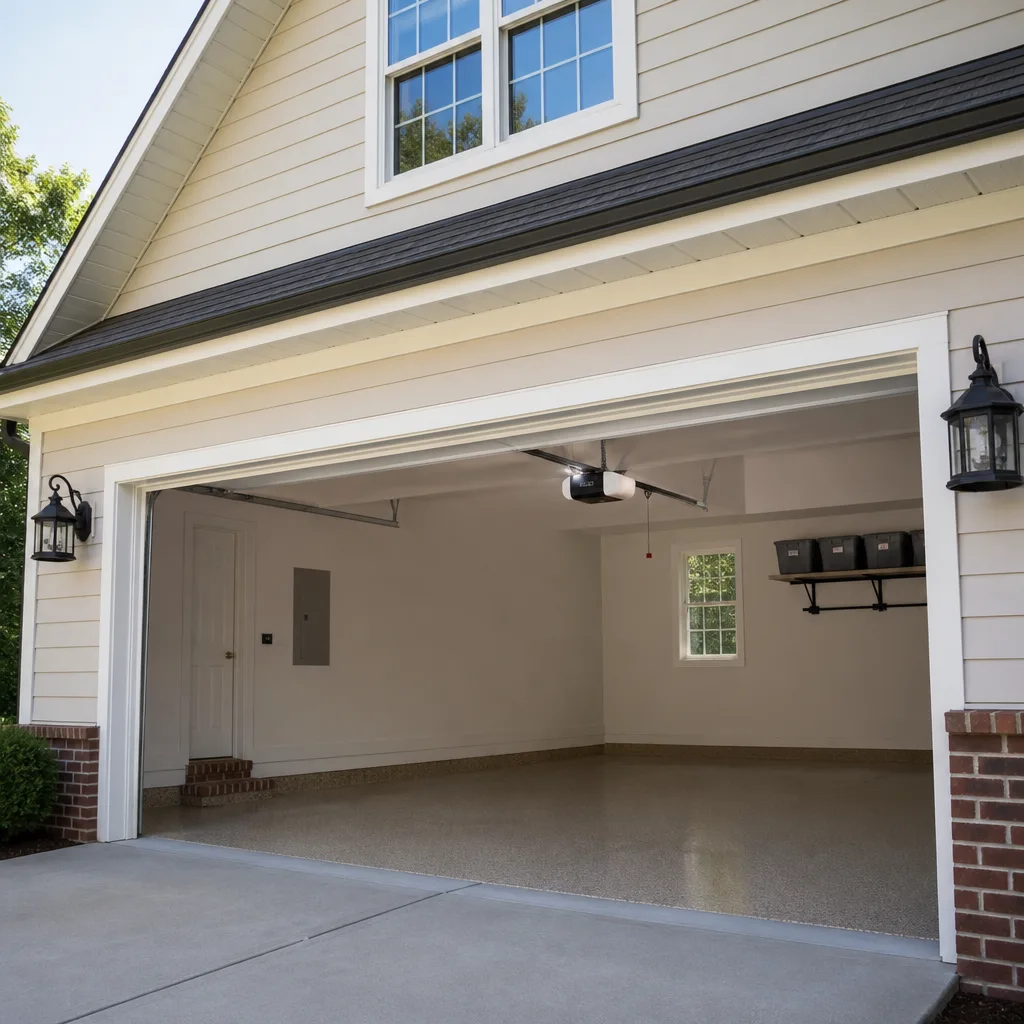 LiftMaster openers
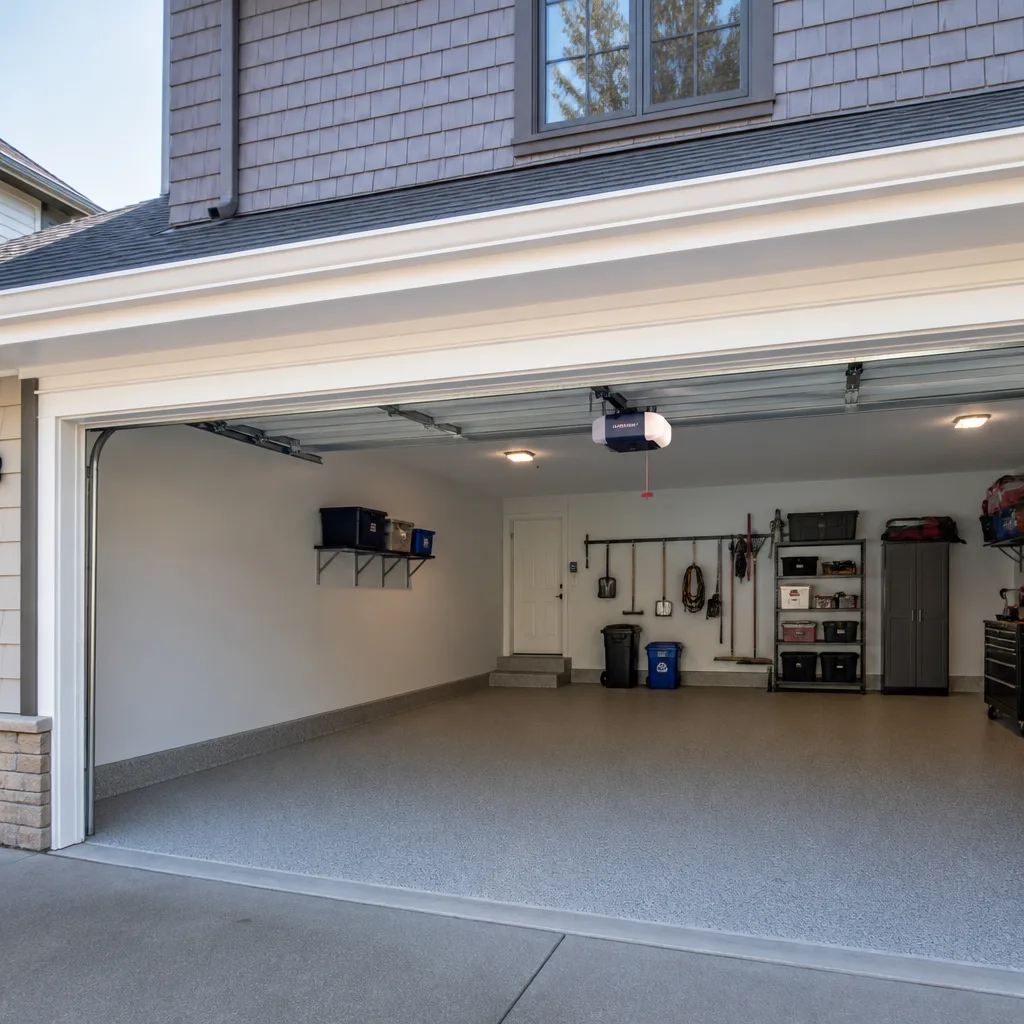 Chamberlain openers
Full 25-point door and opener safety check with every visit - springs, cables, rollers, tracks, and your LiftMaster or Chamberlain opener included
You get a price before we start. It does not change when the truck arrives.
Get your free estimateGarage Door Emergency Preparedness Guide for Murrieta Homes
Most Murrieta homeowners don’t realize their garage door is the only emergency exit they’ve never practiced using. During the 2019 Tenaja Fire evacuation, several residents on manual lockout with no power and a car sitting in the garage found themselves trapped behind a door they couldn’t open because they’d never pulled the manual release cord. That gap in preparation is fixable in about five minutes today. This guide covers the three emergency scenarios Murrieta homes actually face: power outages during heat events, wildfire evacuations on tight timelines, and earthquake aftermath that can silently compromise your door’s safety.
Quick Answer
A garage door emergency in Murrieta usually means one of three things: the power is out and the opener won’t respond, a wildfire evacuation requires quick manual operation, or an earthquake has shifted the track and the door won’t move safely. Every homeowner can prepare by learning the manual release procedure for their specific opener, keeping the emergency release accessible, and knowing how to inspect the door after ground movement before attempting to operate it. This guide walks through each scenario step by step so you’re never standing in front of a stuck door during an emergency.
Styles & brands we work with
Table of Contents
- How to Manually Open Your Garage Door When the Power Is Out
- Belt-Drive vs. Chain-Drive: Manual Release Differences That Matter
- Post-Earthquake Garage Door Protocol for Murrieta Homes
- Wildfire Evacuation: Exiting Fast and Securing Your Door
- Battery Backup Openers: Are They Worth It for Murrieta?
- How to Restore Automatic Operation After a Manual Override
- Common Mistakes to Avoid
- When to Call a Professional
How to Manually Open Your Garage Door When the Power Is Out
Power outages in Murrieta during summer heat events are common enough that SDG&E and SCE have implemented Public Safety Power Shutoffs during high fire-risk conditions. When the power cuts out, your automatic opener becomes a dead weight. The door itself still works, but only if you know how to disengage it from the opener’s trolley carriage. This is the single most important skill for garage door emergency preparedness.
Every opener installed since 1982 has a manual release mechanism, typically a red cord hanging from the trolley carriage near the center of the door track. Pulling this cord disconnects the door from the opener motor, allowing you to lift the door by hand. Here’s the process:
- Ensure the door is fully closed. If the door is partially open when power fails, do not pull the release cord. A partially open door can come crashing down when disengaged, and the spring tension at partial points can cause unpredictable movement.
- Locate the red release cord. It hangs from the center rail above the door, usually near the front of the track. It typically has a red plastic handle on the end.
- Pull the cord straight down and toward the door. You’ll hear a click as the trolley disengages from the carriage. The door is now free from the opener.
- Lift the door manually. Use the door’s handle or the bottom edge. A properly balanced door should lift with 10 to 15 pounds of effort. If it feels heavy or won’t stay up, the springs may be failing, and you should stop and call a professional.
- Raise the door fully before releasing. Never leave a manual door partially open. It can drift down unexpectedly and cause injury or damage.
In our experience, approximately half of Murrieta homeowners we visit have never pulled their release cord. The cord is there for exactly this scenario, and practicing it once when there’s no emergency means you won’t be fumbling with it in the dark during an evacuation. We’ve also seen homes where the release cord is zip-tied out of reach, left tangled in the track, or missing its handle entirely. All of these make an emergency situation worse.
If your opener is older and the release mechanism feels stuck or won’t disengage, contact a garage door specialist before you need it. The team at Murrieta Garage Door Service works on Garage Door Opener Repair in Murrieta and can ensure your manual release actually works when you pull it.
Belt-Drive vs. Chain-Drive: Manual Release Differences That Matter
Not all manual releases behave the same way, and the difference between belt-drive and chain-drive openers affects how the emergency release feels and operates. Knowing which type you have changes how you approach the disengagement.
Belt-Drive Openers
Belt-drive openers, common on Chamberlain and LiftMaster units installed in Murrieta homes, use a reinforced rubber belt to move the trolley. When you pull the release cord on a belt-drive system, the trolley disengages smoothly and the door moves freely with very little resistance. The belt itself stays in place and doesn’t drag against the track. You’ll hear a softer click when the release engages, and the door typically requires less manual lifting effort. Belt-drive release cords also tend to be slightly longer in some Chamberlain models, which makes them easier to reach if you’re shorter in stature or the ceiling is higher.
Chain-Drive Openers
Chain-drive openers, found on many Genie, Craftsman, and older Raynor units, use a metal chain on a sprocket. The release mechanism on a chain-drive feels different: there’s more mechanical resistance when you pull the cord, and you’ll hear a more pronounced metal-on-metal click as the trolley separates. The chain itself continues to hang loosely above the door, and if the opener is older, the chain may have stretched over time, making the release less crisp. On some chain-drive models, pulling the release cord at an angle rather than straight down can bind the mechanism. Pull straight down, firmly, and in one motion.
Both systems use the same general principle, but the feel is different enough that a homeowner who’s practiced with one type might hesitate when facing the other. If you’ve recently moved into a different Murrieta home or had your opener replaced, take thirty seconds to confirm which system you have. The red cord is universal, but the tactile experience is not.
We service both drive types across Murrieta, and the most common issue we see with manual releases on chain-drive systems is rust or corrosion on the release mechanism, particularly in garages near the coast or homes with high humidity. A quick visual check once a year catches this before it becomes an emergency.
Post-Earthquake Garage Door Protocol for Murrieta Homes
Murrieta sits near several active fault lines, including the Elsinore Fault Zone, and has felt significant shaking from earthquakes across Southern California. What most homeowners don’t realize is that a garage door is one of the first structural components to shift during ground movement, because it’s the largest moving element in your home’s exterior envelope. After any earthquake, even a minor one, you should treat your garage door with suspicion until you’ve inspected it.
What to Check Before Operating the Door
Ground movement can displace the vertical track, bend the horizontal track, loosen the spring anchor brackets, or shift the foundation header that supports the entire door assembly. Operating the door with any of these conditions can cause it to derail, bind, or in the worst case, drop the door off its track entirely. The springs are under tremendous tension, and if the spring bracket has shifted, the entire spring system can release when you attempt to open the door. This is not a DIY repair scenario: a garage door spring under tension can cause serious injury. Here’s what to look for:
- Gaps between the door and the wall/frame. Walk to each side of the door and look at the seal. Any gap that wasn’t there before indicates the door has shifted on its axis.
- Bent or bulging track sections. Examine the vertical and horizontal track from ground level. Even a slight bow means the rollers can’t travel smoothly and the door may bind or jump the track.
- Loose mounting brackets. Look at where the track attaches to the wall and ceiling. If any bracket is no longer flush against the wall, or if you can see daylight through the screw holes, the system has moved.
- Spring movement. Check the torsion springs above the door (the horizontal springs on the header). If one sits at a different angle than the other, or if the center bearing bracket is tilted, the spring assembly has shifted. Do not touch the springs.
- Header cracks. Look for new drywall cracks or gaps above the door frame on the inside and outside. This indicates the header has moved, which affects the entire opening.
If you find any of these conditions, leave the door closed and call a garage door specialist before attempting to open it. Post-earthquake door realignment is a job for a trained professional who can release spring tension safely and re-square the entire track system. We’ve realigned doors in Murrieta after significant shaking where the door was still operational but the track had shifted a quarter inch, not enough to notice casually but enough to wear out rollers within months and eventually derail the door.
Wildfire Evacuation: Exiting Fast and Securing Your Door
Murrieta’s wildfire risk is real, with evacuations ordered during the Tenaja Fire and other incidents in the region. When an evacuation order comes, you may have minutes, not hours. Your garage door matters because for many Murrieta homes, the garage is the primary vehicle exit and often contains a second car or important supplies. But it also matters for what happens after you leave: an unsecured garage door is an entry point for anyone who remains in the area, and it’s the largest unprotected opening in your home’s perimeter.
The Evacuation Sequence
- If power is available: Open the garage door with the opener, back the car out, and close the door normally behind you. This is straightforward, but it assumes everything works. In an evacuation during a wildfire, power may already be out. Know your manual release.
- If power is out: Pull the manual release cord, lift the door fully, and drive out. If a second person is available, have them lower the door by hand after the car exits. If you’re alone, you’ll need to close the door from outside using the manual lock, which most Murrieta homes have on the inside of the door and many homeowners don’t know exists.
- Manual door lock from outside: Most residential garage doors have slide locks on the inside, one on each track or one centered near the bottom. These are small metal levers that slide into the track and prevent the door from being lifted. You can only operate these from inside while the door is up. To lock from outside after exiting: pull the manual release, close the door by hand from outside using the exterior handle or the door’s bottom edge, and if your door has an exterior locking handle (common on some Amarr and Wayne Dalton models), turn the key or twist the handle to lock. If there’s no exterior lock, you can use a padlock through the track hole near the bottom roller to prevent lifting from outside. This is a temporary measure, but it prevents a casual breach.
- Leave the door visibly closed and locked. In an evacuation, you want your home to look secured, not open. An open garage is a signal that no one is home and the property is abandoned.
What Emergency Responders May Need
During wildfire events in Southern California, responders sometimes need to access backyards, exterior electrical panels, or gas meters. In a few cases, the garage is the only route through to the backyard. Consider whether your neighborhood has this layout. If your home is a zero-lot-line build or your side yards are gated, the garage door may be the only path for firefighters to reach the back of the house. In an evacuation, ask yourself whether leaving a secondary access point, like a side gate or a garage side door, unlocked makes sense. The garage’s main overhead door should be closed and secured, but a side door leading to the backyard may need to be left accessible.
This is a judgment call, and it depends on your specific property. The key is thinking through it now, not while a fire is approaching. Walk your property today and identify how a responder would access your backyard if the gate is locked and the garage is closed.
Battery Backup Openers: Are They Worth It for Murrieta?
Given the shutoff history from SDG&E and SCE during high wind and fire-risk periods, Murrieta homeowners have a stronger case for battery backup openers than most of the country. A battery backup keeps your opener working through an outage, preserving full automatic operation of the door for anywhere from 12 to 50 cycles depending on the unit, which typically translates to 12 to 36 hours of normal use.
Realistic Runtime Expectations
Battery backup units on LiftMaster and Chamberlain openers advertise up to 50 open/close cycles on a fully charged battery. In practice, most Murrieta homeowners can expect 20 to 30 cycles, which is more than enough for a two to three day outage if you’re not opening and closing the door repeatedly. The battery charges when the power is on and automatically takes over when AC power fails. Some units also provide audible alerts when running on battery, which is useful because it tells you to conserve cycles rather than treating the opener as fully functional.
Units Worth Considering
LiftMaster’s DC battery backup openers, specifically the belt-drive models, are the most common installations we do in Murrieta when a homeowner asks for outage protection. Chamberlain’s equivalent belt-drive models offer the same core feature at a somewhat lower price point. For homes with Genie openers, the Genie battery backup option uses a separate battery unit that integrates with the existing opener, which is a practical retrofit rather than a full replacement. We work on all of these systems and can usually diagnose whether your existing opener can accept a retrofit battery or whether a replacement makes more sense.
The honest assessment: if you’ve never been through an extended outage in Murrieta, a battery backup might seem like an unnecessary expense. But outages that coincide with summer heat events are exactly when you don’t want to be manually lifting a heavy garage door in 100-degree heat, especially if you have a second car you use less frequently stored in the garage. For households with medical needs, small children, or older adults, the convenience of automatic operation during an outage is worth the investment. For everyone else, knowing your manual release works is the minimum standard. Our Garage Door Installation in Murrieta service covers opener replacement and installation, and we’ll give you an honest recommendation on whether battery backup makes sense for your specific home.
How to Restore Automatic Operation After a Manual Override
This is the step most Murrieta homeowners get wrong, and it’s one of the most common avoidable repairs we see. After power returns or you’re back home and ready to reconnect the door to the opener, the sequence matters. Doing it wrong can strip the trolley carriage, bend the release mechanism, or cause the opener to slam the door against the floor or the ceiling.
The Correct Reconnection Sequence
- Confirm the door is fully closed. Never attempt to re-engage the trolley with the door in any other position. The opener’s travel limits are calibrated for a closed door, and engaging mid-travel confuses the system.
- Run the opener motor once. With the door disconnected, press the wall button or remote once and let the opener complete a full cycle. This moves the trolley carriage along the rail so it’s in the proper position to reconnect. For most openers, the trolley needs to reach the “down” position to re-engage with the carriage.
- Pull the release cord back toward the door. On most openers, pulling the cord toward the garage door (away from the motor unit) re-engages the trolley. Some models require you to pull straight down and then guide the trolley manually until it clicks into place. You’ll hear a definitive click when the connection re-engages.
- Test the connection. Press the wall button once. The door should move normally with the opener doing the lifting. If the opener runs but the door doesn’t move, the trolley did not re-engage. Repeat steps 2 and 3.
- Check the door balance. After the first automatic cycle, watch the door move. If it hesitates, reverses, or struggles, the door may have come off balance during the manual operation. Contact a professional rather than continuing to use the opener.
What Homeowners Do Wrong
The most common error is attempting to reconnect the trolley by running the opener while the release cord is still in the disengaged position. The opener motor cycles, the trolley slides along the rail, and the carriage never re-engages, which means the opener runs a full cycle without moving the door. This isn’t harmful by itself, but it confuses the opener’s logic board, and on some models, it can cause the opener to lose its travel limit settings. The door then needs a reprogramming visit, which is an unnecessary service call.
The second common mistake is pulling the release cord while the door is partially open, then trying to re-engage at that position. This is how trolley carriages get damaged. The carriage and trolley are designed to engage at specific points in the rail, and forcing the engagement at the wrong point can bend the carriage arm or the release lever mechanism.
In our experience serving Murrieta, about one in five service calls for “opener won’t work” after a power outage or manual override involves a trolley that was re-engaged incorrectly. The fix is usually simple, but it’s preventable. If you’ve had trouble re-engaging your door and the opener isn’t lifting the door, contact Murrieta Garage Door Service, and we’ll get it sorted out.
When a Manual Release Won’t Work: Other Emergency Scenarios
Not every garage door emergency is a power outage. In Murrieta, we see a handful of other situations regularly enough that homeowners should know how to respond before they happen.
Broken Spring with the Door Closed
A broken torsion spring sounds like a gunshot when it snaps. If your door won’t open and you hear no motor strain, or if you notice the spring above the door is visibly separated into two pieces, do not attempt to open the door manually or with the opener. The opener may still try to lift the door, but with one spring broken, it can’t counterbalance the door’s weight. Continuing to operate the door can burn out the opener motor or cause the door to drop suddenly. Some LiftMaster and Chamberlain units have safety systems that detect the imbalance and refuse to operate, which is a built-in safeguard. If the door won’t open and the spring is broken, this is a professional repair. We handle Garage Door Repair in Murrieta daily, and spring replacement typically happens same-day.
Door Off Track
If your door has come off its track, whether from an earthquake, a vehicle impact, or a failed roller, the door will not move safely. Operating the opener in this condition can cause the door to fall completely, which is a serious safety hazard for anyone nearby. A door that’s partially off track often shows one side lower than the other, or you’ll see a gap between the door edge and the track. Don’t attempt to reseat the door yourself. The track must be inspected for damage, the rollers checked, and the door re-aligned. This is never a DIY fix, and attempting it with the door’s full weight suspended is dangerous.
Opener Motor Running but Door Not Moving
If you hear the opener running but the door is stationary, this usually means the trolley was disengaged, the carriage is stripped, or the drive gear in the opener has failed. On belt-drive openers, a stripped belt is another possibility. This is an opener repair scenario, and depending on the age of the unit, a replacement may be more cost-effective than a repair. We’ll give you a straight assessment either way.
See the difference
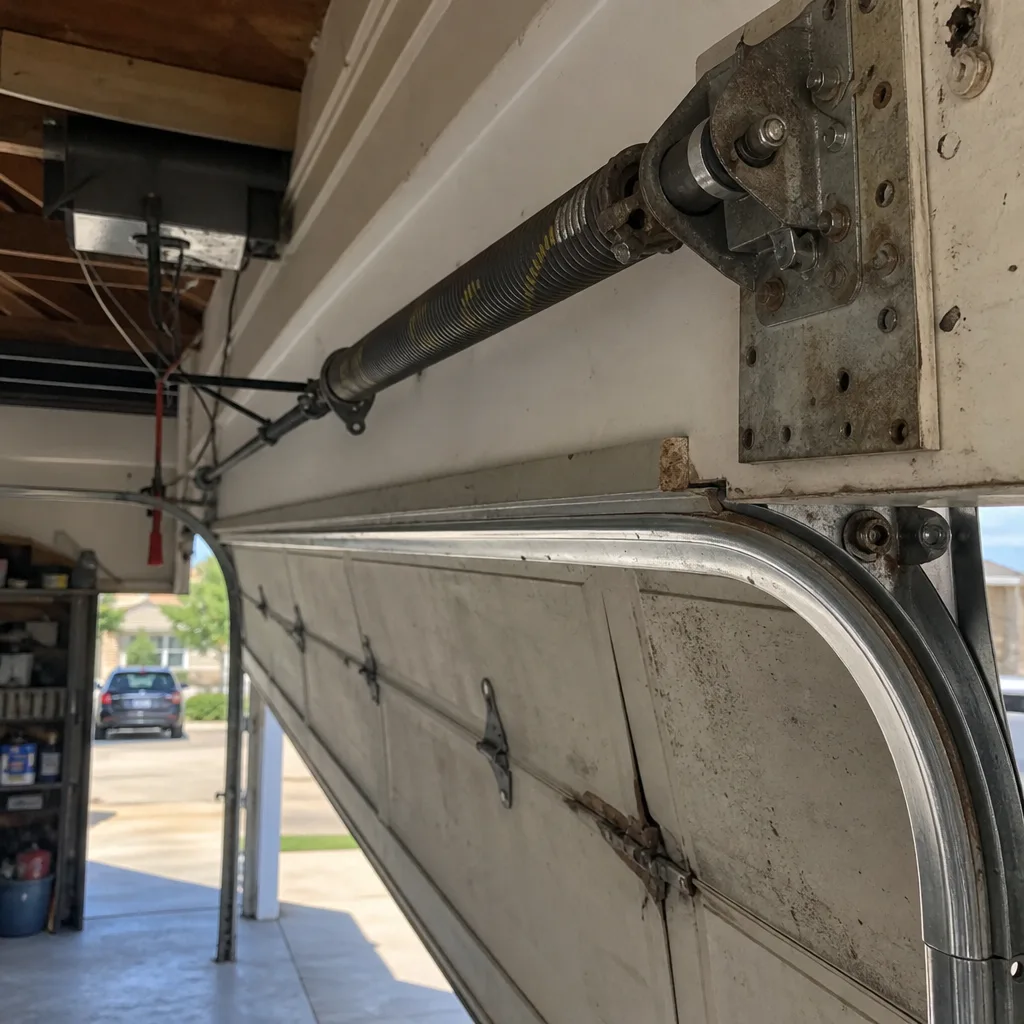 Before
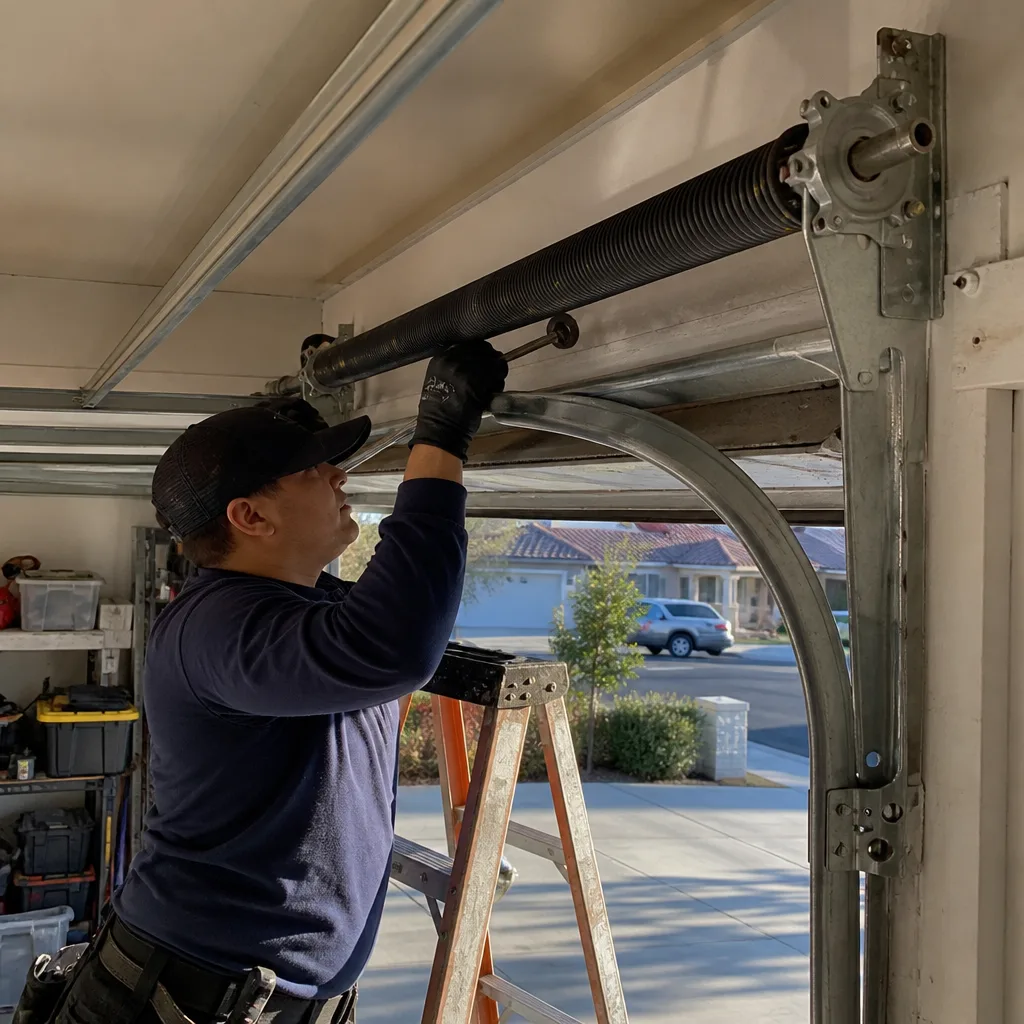 After
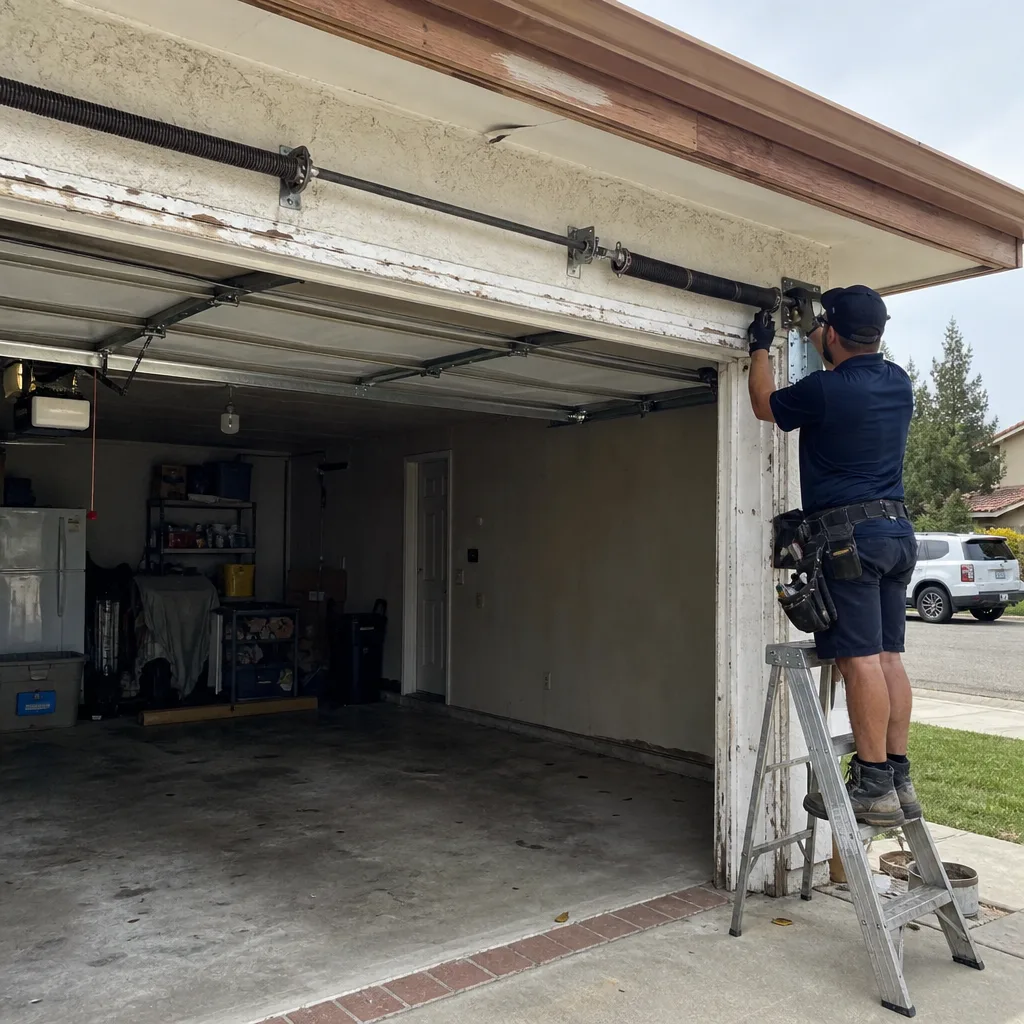 Before
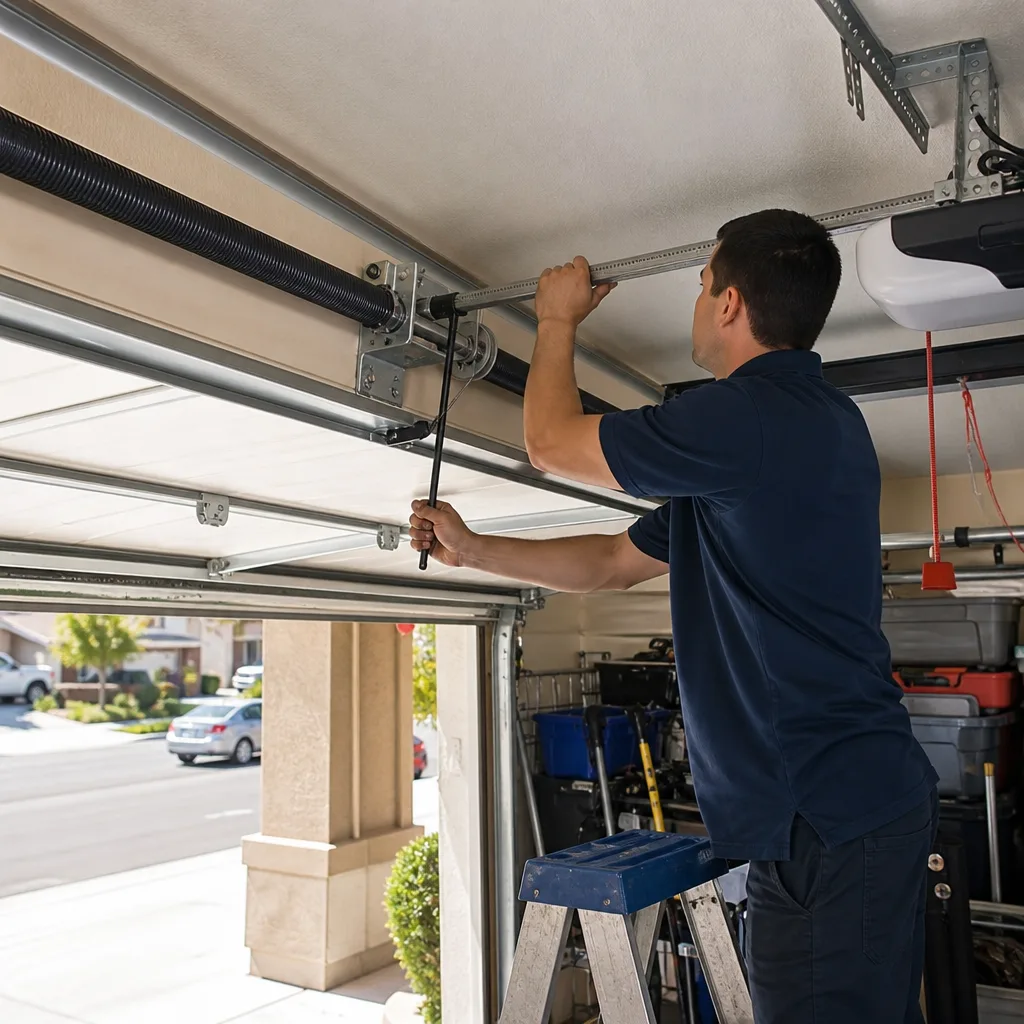 After
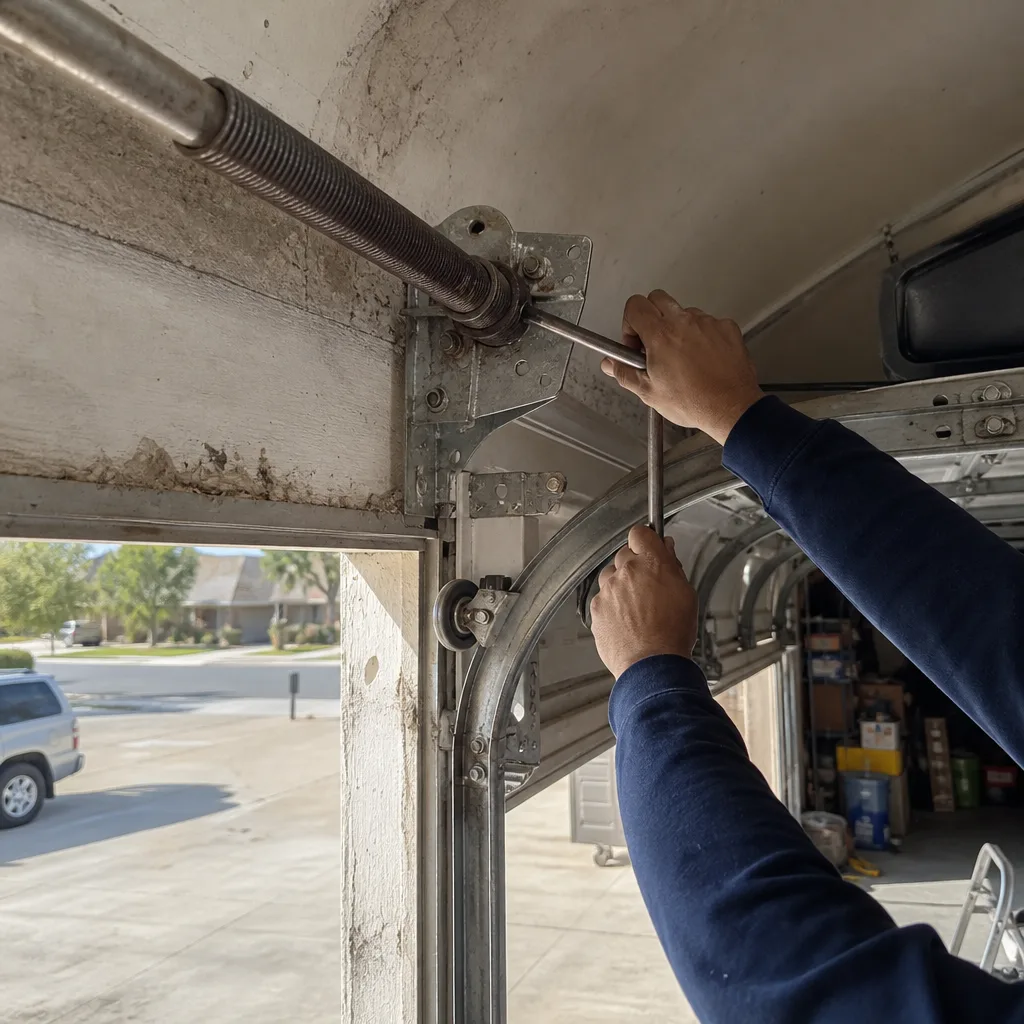 Before
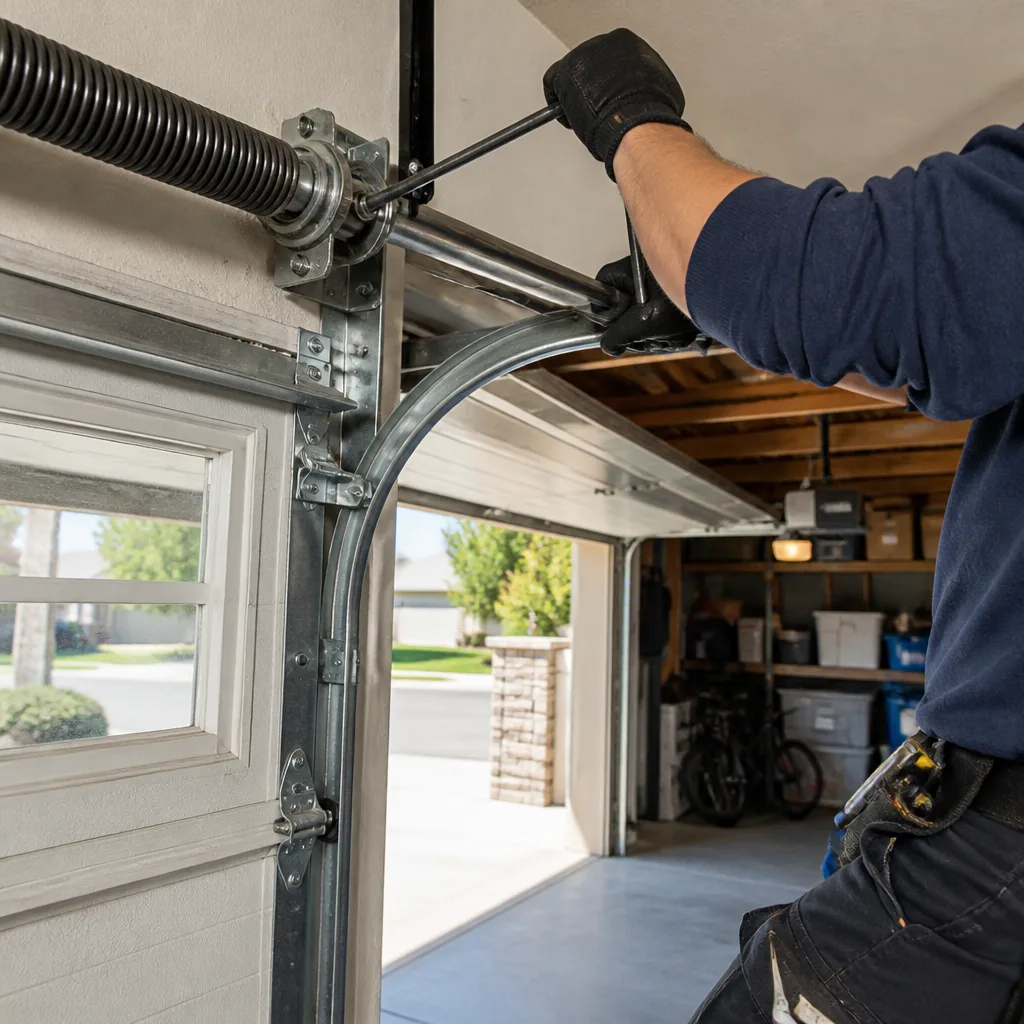 After
Preparing Your Garage Door for Murrieta’s Fire Season and Heat Events
Murrieta’s fire season typically runs from late spring through fall, with the highest risk during Santa Ana wind events when humidity is low and winds are strong. During these periods, garage doors face two compounding stresses: extreme heat that accelerates wear on springs and cables, and the real possibility of preemptive power shutoffs. Here’s a checklist for seasonal preparedness:
- Test the manual release every six months. Pull the cord, lift the door by hand, close it, and re-engage. This confirms all components work and keeps the mechanism from seizing. If the door feels heavy when lifting manually, have the springs checked.
- Lubricate the springs, rollers, and hinges. Metal on metal wears faster in dry heat. A lithium-based garage door lubricant applied twice a year keeps the door moving quietly and extends component life. Avoid WD-40; it’s a solvent, not a lubricant.
- Inspect the weather stripping. Murrieta’s dust and heat can dry out the rubber seal at the bottom of the door, and once it cracks, dust and hot air enter the garage. Replace worn stripping before fire season.
- Check the emergency release cord. Make sure it’s accessible, not zip-tied, and the handle is intact. If you have young children, the cord should be high enough that they can’t reach it but low enough that an adult can pull it quickly.
- Test the opener’s safety reversal system. Place a roll of paper towels under the door and close it. The door should reverse when it contacts the obstruction. This system prevents serious injury and should work correctly at all times, not just during emergencies.
- Know where your manual lock is. If you had to evacuate, would you know how to secure the door manually? Look for slide locks on the track and exterior handles on the door. If your door has neither, consider having them installed.
This checklist takes about fifteen minutes twice a year. For Murrieta homeowners, we recommend doing it in late spring before fire season peaks and again in late fall before winter storms, which are rare but can bring high winds that stress door components in different ways.
Garage Door Brands and Emergency Behavior: What We’ve Observed
One advantage of working on eight major garage door brands is seeing how different systems behave in Marrier’s specific conditions. We work on LiftMaster, Chamberlain, Genie, Clopay, Amarr, Wayne Dalton, Craftsman, and Raynor systems, and each has its quirks during emergency scenarios. We’re brand-agnostic, meaning we service whatever brand you already have rather than pushing a replacement to match some limited inventory. If your neighbor has a Wayne Dalton and you have an Amarr, the manual release still works the same way, but there are brand-specific details worth knowing.
- Amarr doors often have exterior keyed handles that make locking from outside simpler during an evacuation. If your Amarr door has this feature, test the key now, not during an emergency.
- Wayne Dalton doors on older homes sometimes use a TorqueMaster spring system that’s hidden inside the tube rather than exposed like a standard torsion spring. These require a different inspection approach after earthquakes because you can’t visually see the spring condition. If your Wayne Dalton door has a round tube above the door rather than exposed springs, treat any unusual resistance as a red flag and call us.
- Craftsman openers, common in Murrieta homes built in the 1990s and 2000s, often have chain-drive systems with release cords that become stiff with age. The release still works, but it takes more force than homeowners expect. If your Craftsman release cord takes significant effort to pull, practice it now so you don’t think something’s broken during an emergency.
- Raynor doors are less common in Murrieta than the others but appear in some custom homes. Their track systems are robust, but replacement parts are less widely stocked, which can mean longer repair timelines. This matters during an emergency because a Raynor door that’s off track may not be a same-day fix if parts need to be ordered.
The takeaway: know your brand, know your release mechanism, and if you’re not sure what you have, we can identify it and walk you through the basics during a regular service visit. Our Murrieta Garage Door Service home page has more on how we approach different brands and what to expect from a visit.
Common Mistakes to Avoid
- Never pulling the release cord until you need it. The emergency release is a mechanical device, and mechanical devices can seize. In our experience, cords that haven’t been pulled in years either work perfectly or not at all. There’s no middle ground, and finding out which one you have during an evacuation is the wrong time.
- Trying to lift a door with a broken spring. A double garage door can weigh 200 to 400 pounds. One working spring doesn’t make it manageable, and trying to lift it manually or with the opener will cause more damage and may cause injury.
- Operating the door after an earthquake without an inspection. Ground movement is unpredictable. A door that looks fine may have shifted track brackets that fail on the next cycle. Thirty seconds of visual inspection prevents a much larger repair.
- Forcing the trolley to re-engage by jerking the release cord. The re-engagement is designed to be a smooth process. Jerking or forcing the mechanism bends parts, and a bent carriage means an opener replacement, not a simple fix.
- Leaving the door partially open during an outage. A partially open door can fall when spring tension shifts, and it lets heat, dust, and wildlife into the garage. Fully open or fully closed, nothing in between.
- Ignoring unusual noises for months. Grinding, squealing, or popping sounds from your garage door are not normal. They indicate wear on springs, rollers, or the opener. Addressing these sounds during routine maintenance prevents emergency failures during outages or evacuations.
- Not knowing whether your opener has a battery backup. If you’re not sure whether your opener has a battery backup, you probably don’t have one. Look for a battery backup indicator light or a unit that mentions “battery” on the motor housing. If you’re unsure, we can identify it during a service call.
When to Call a Professional
Some garage door emergencies are solvable with the steps in this guide. Others are not. You should call a professional if you’re facing a snapped torsion spring, a door that’s off its track, an opener that runs but won’t move the door, or any post-earthquake condition where the track or header shows signs of movement. These scenarios involve high-tension springs, heavy door sections, and precision alignment, and attempting repairs without proper tools and training creates a serious injury risk.
Murrieta Garage Door Service covers the full range, from emergency spring replacement to full door installation, and we work on all the common brands found in Murrieta homes. If you’ve run through this guide and your door still won’t cooperate, call us at (866) 798-2664 for a free estimate. Garage doors are all we do, so we diagnose the problem quickly and quote the repair before any work starts.
Frequently Asked Questions
Pull the red emergency release cord hanging from the center rail, which disconnects the door from the opener, then lift the door manually using the door handle or bottom edge. A properly balanced door lifts with 10 to 15 pounds of effort. If it’s heavier than that, your springs may need attention, and you should call us at (866) 798-2664.
No, unless your opener has a battery backup unit installed. Standard openers require AC power, and during an outage the only way to operate the door is manually via the release cord. Battery backup units on LiftMaster and Chamberlain openers provide 20 to 50 cycles of automatic operation, which covers most Murrieta outages.
Inspect the track for bending, check that mounting brackets are flush against the wall, look for gaps between the door and frame, and examine the springs above the door for any change in angle or position. If anything looks shifted, leave the door closed and call a professional before operating it.
If your door has an exterior keyed handle, like some Amarr and Wayne Dalton models, turn the key or twist the handle to engage the lock after closing the door manually. If there’s no exterior lock, you can thread a padlock through the track hole near the bottom roller from outside. Many Murrieta homes lack an exterior locking option, which makes a padlock through the track a useful temporary measure.
Yes, but do it correctly: run the opener once with the door disconnected and the door fully closed, then pull the release cord toward the door until you hear a click. Running the opener without re-engaging the trolley can confuse the opener’s settings and cause an unnecessary service call. If you have trouble, call us at (866) 798-2664 and we’ll walk you through it or send a technician.
The cost depends on your opener model. Some Genie units accept a retrofit battery for $100 to $200, while LiftMaster and Chamberlain systems typically require a battery-equipped opener, which runs $300 to $600 installed depending on the model and features. Both options work for Murrieta’s outage patterns, and we’ll give you a written quote upfront so the price is agreed before any work starts.
Broken torsion springs are the most common unplanned emergency we respond to. They snap without warning, typically when the door is closed, and make the door impossible to open safely. The second most common is opener failure after a manual override gone wrong, usually because the trolley wasn’t re-engaged correctly. Both are fixable, and our team responds to these calls across Murrieta regularly.
The Bottom Line
Garage door emergency preparedness in Murrieta isn’t about buying special equipment or memorizing complicated procedures. It’s about knowing your door’s manual release, practicing it once, and knowing what to look for when conditions are unusual. Power outages, wildfire evacuations, and earthquake aftermath all become manageable if you’ve spent five minutes familiarizing yourself with the red cord and the basics of post-event inspection. The homeowners who struggle during emergencies aren’t the ones with fancy openers; they’re the ones who never pulled the release cord until the lights were out and the car was still inside. For more guides & resources, visit our blog.
We’re Garage Door Installation in Murrieta specialists, and we’d rather help you prepare before an emergency than fix the aftermath of a preventable mistake. If you want us to check your door, identify your opener type, and walk you through your specific system’s manual release, call (866) 798-2664. The estimate is free, and the knowledge is yours to keep either way.
Written by the team at Murrieta Garage Door Service, serving Murrieta since 2014.